Vintage Automatic Rolex GMT-Master Gilt Dial Pepsi Bezel Steel circa 1960s
Price on Request
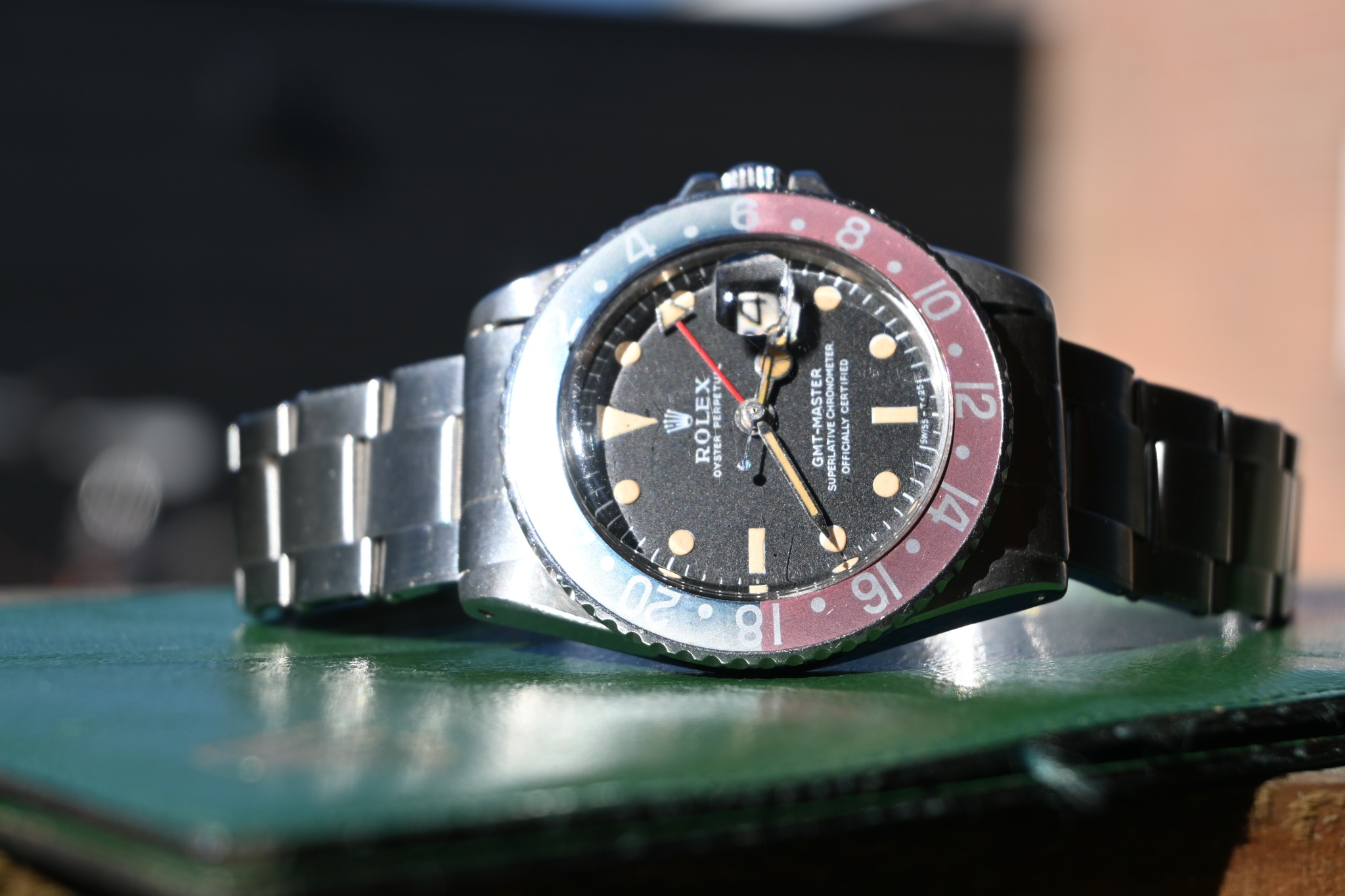
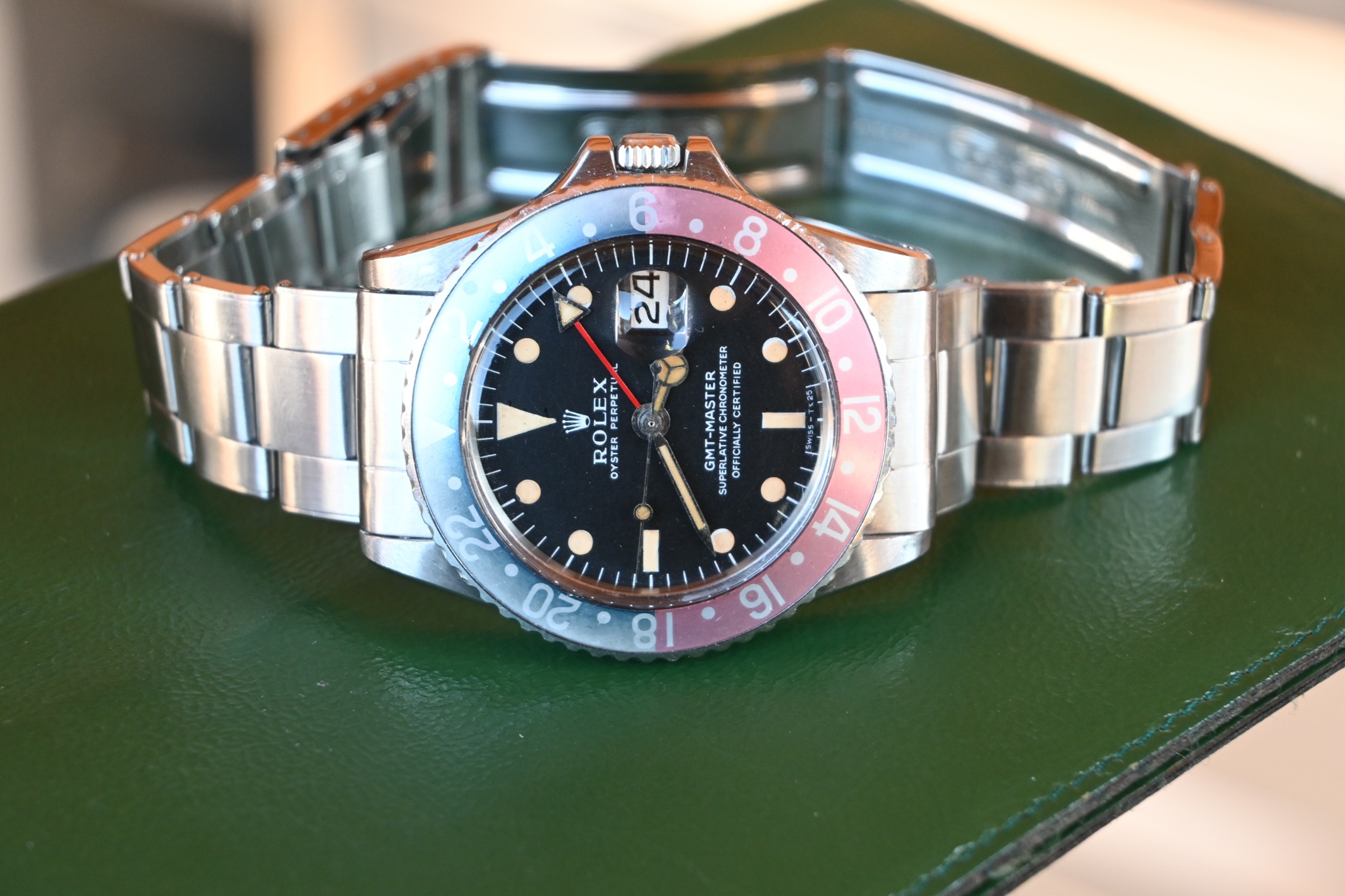
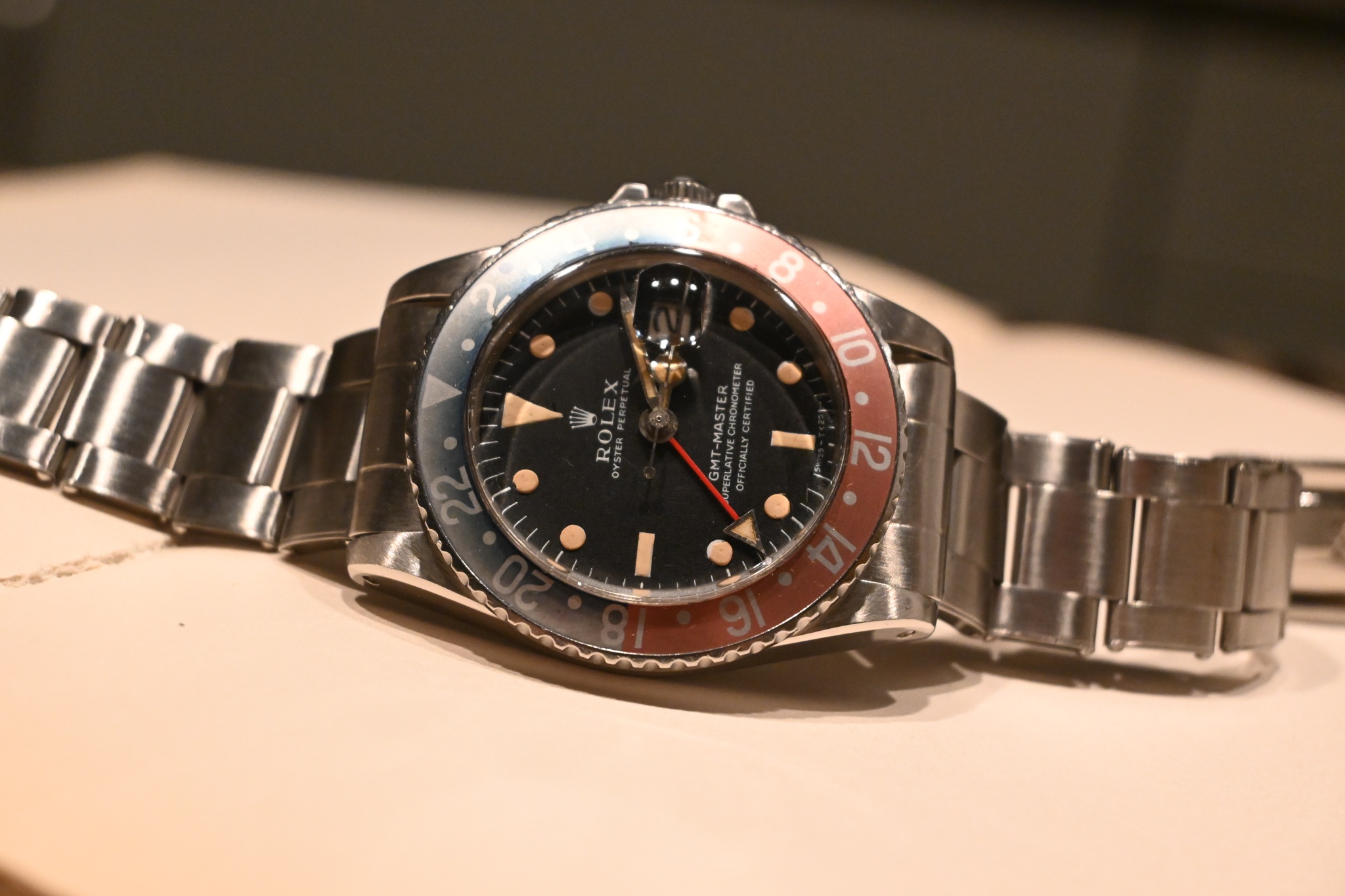
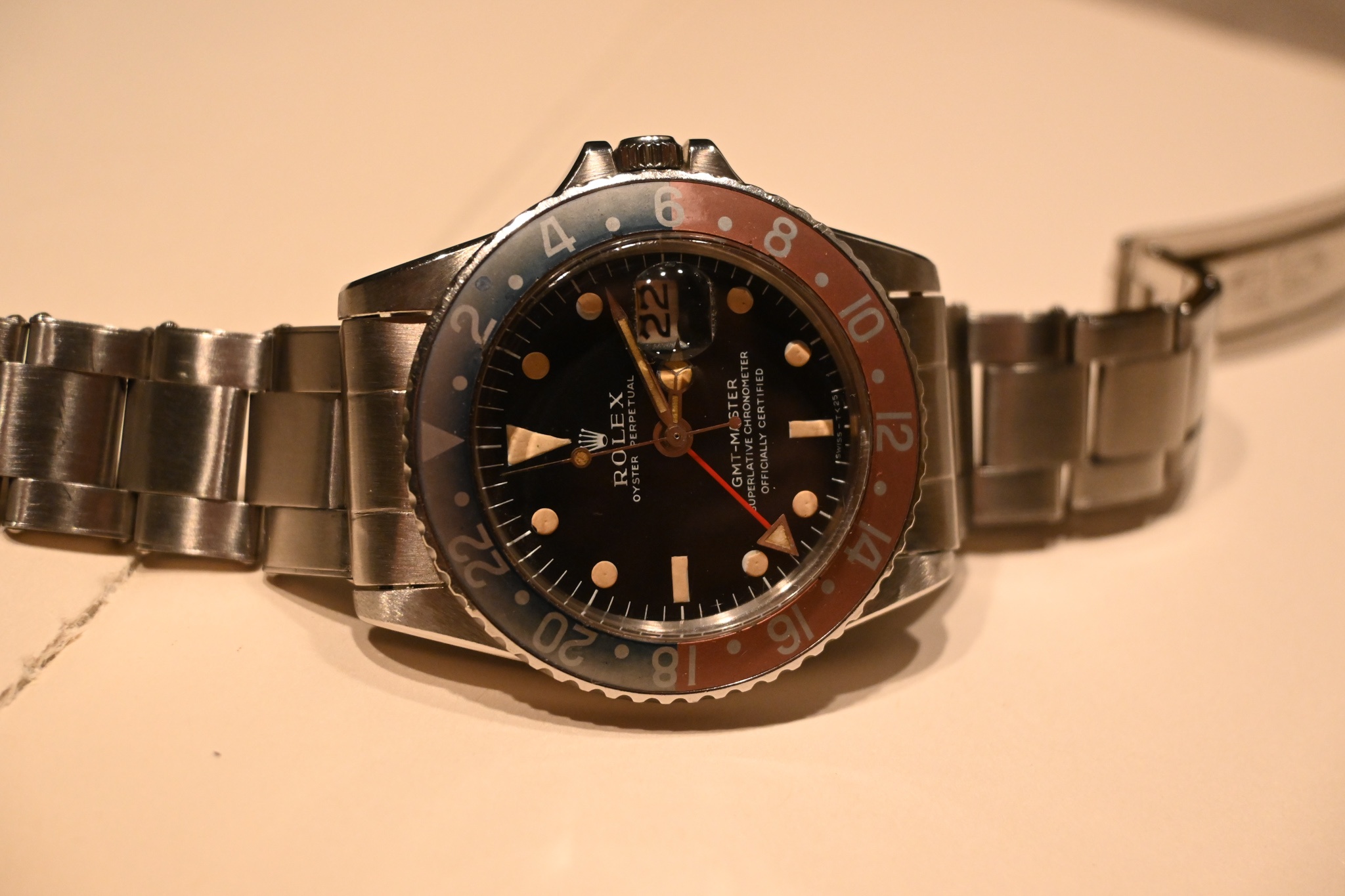
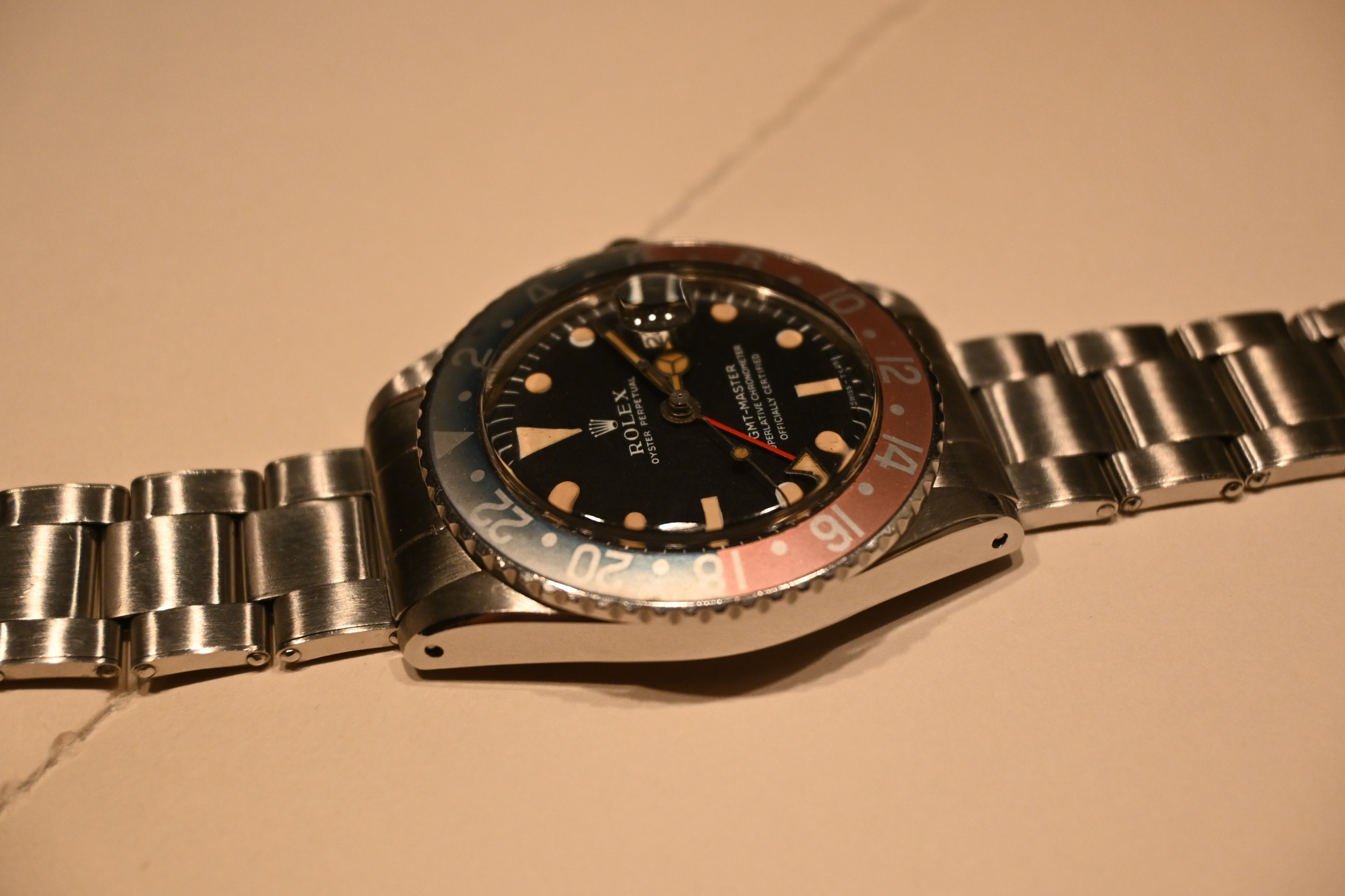
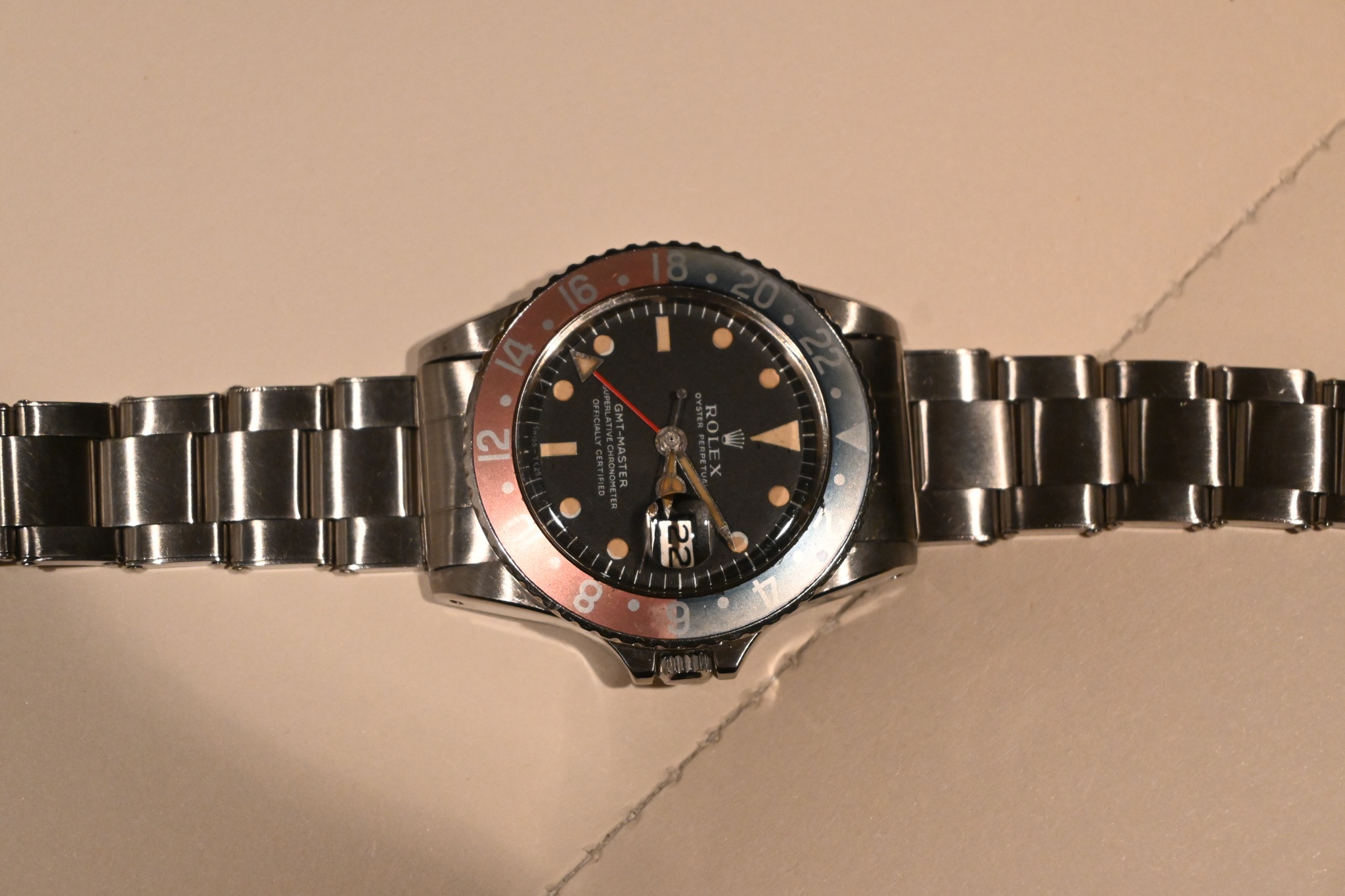
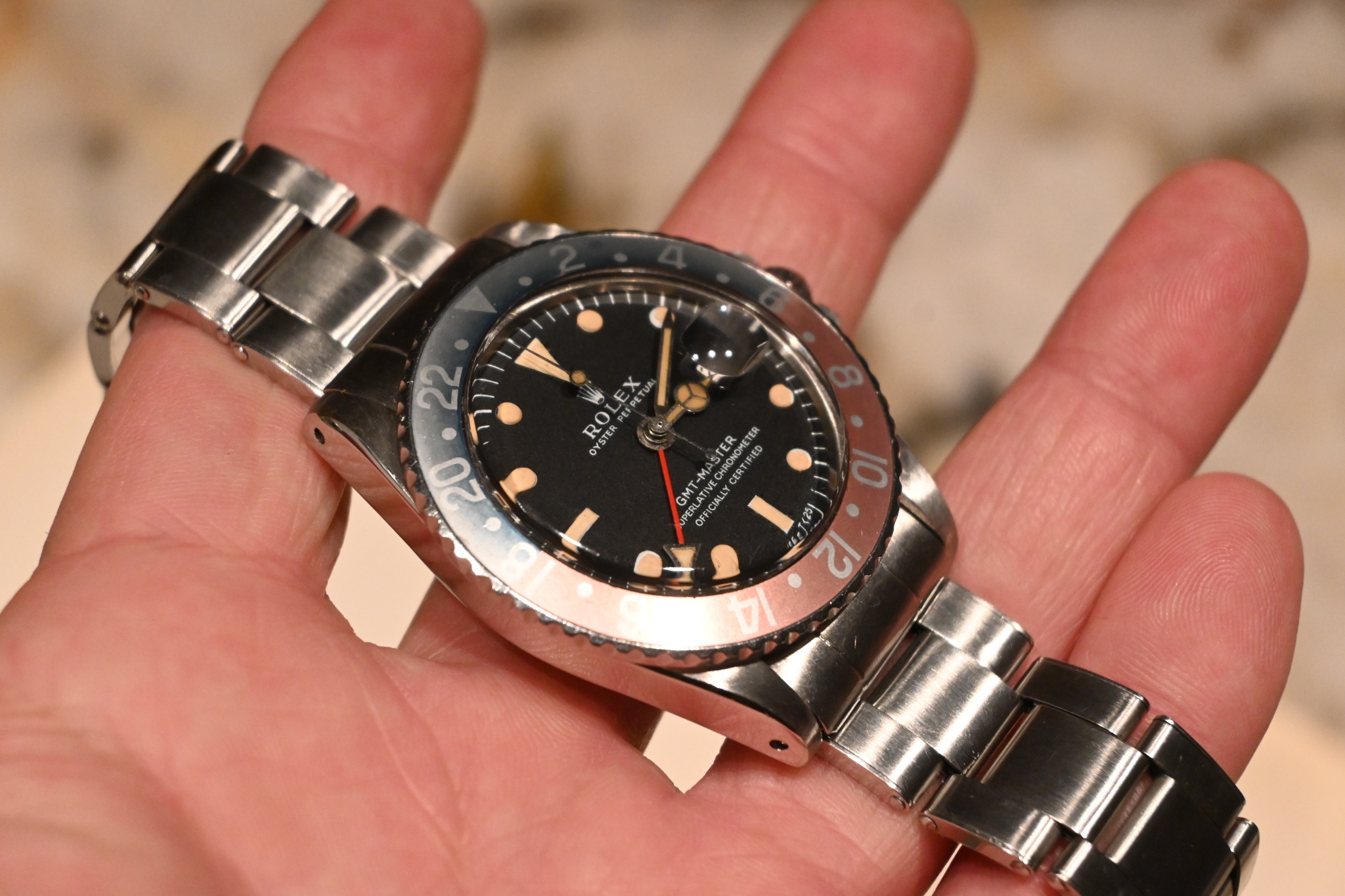
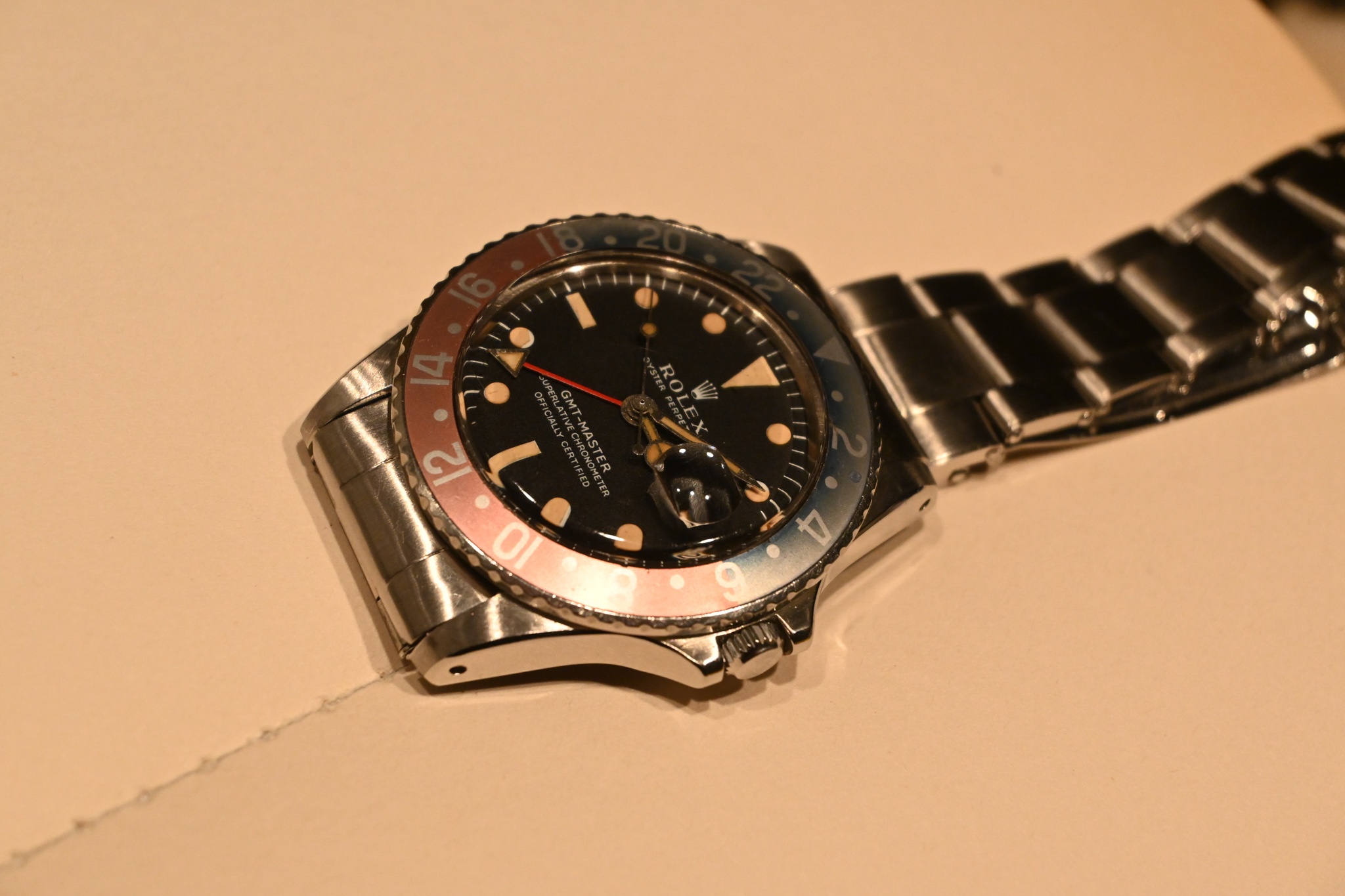
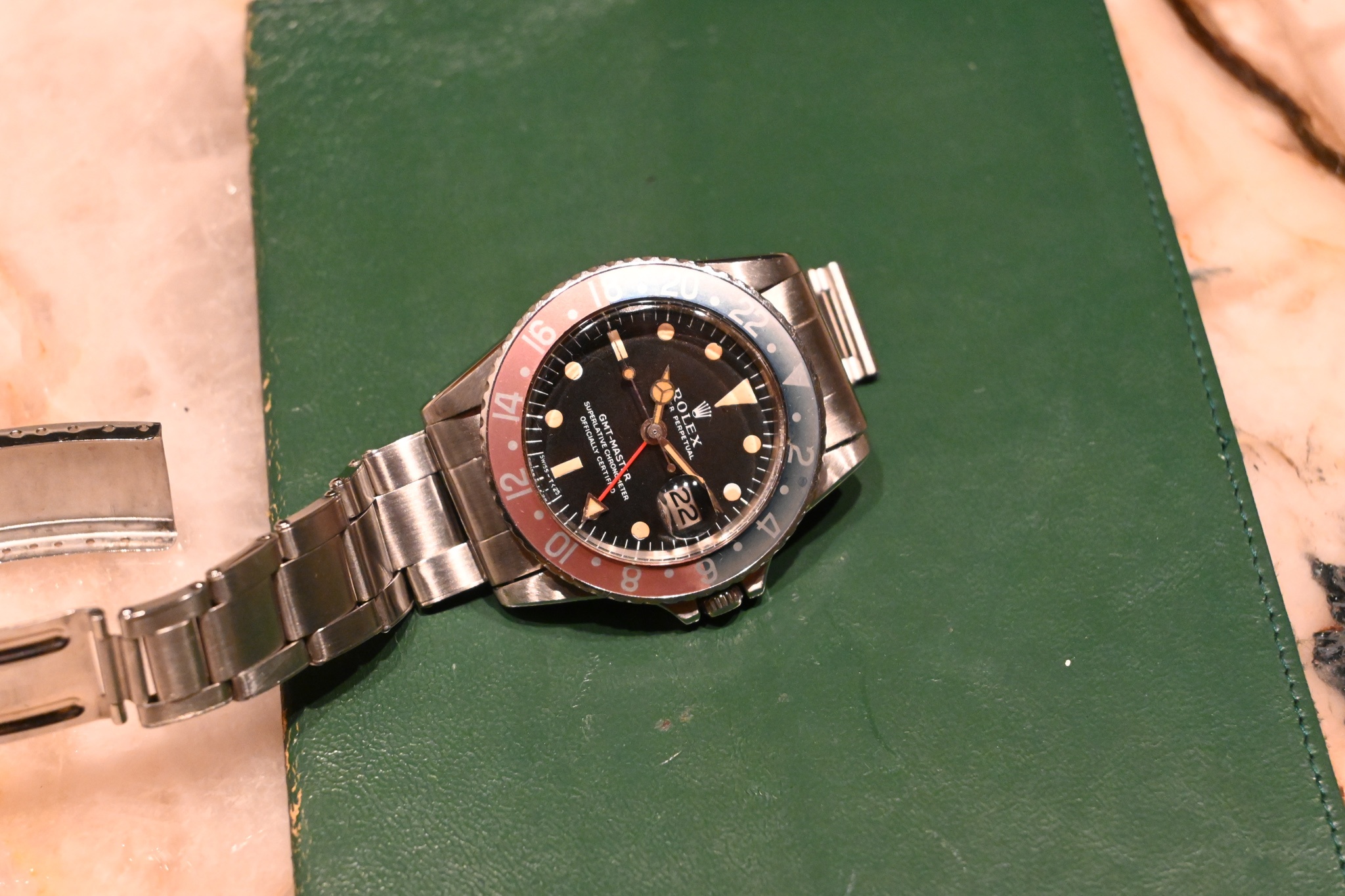
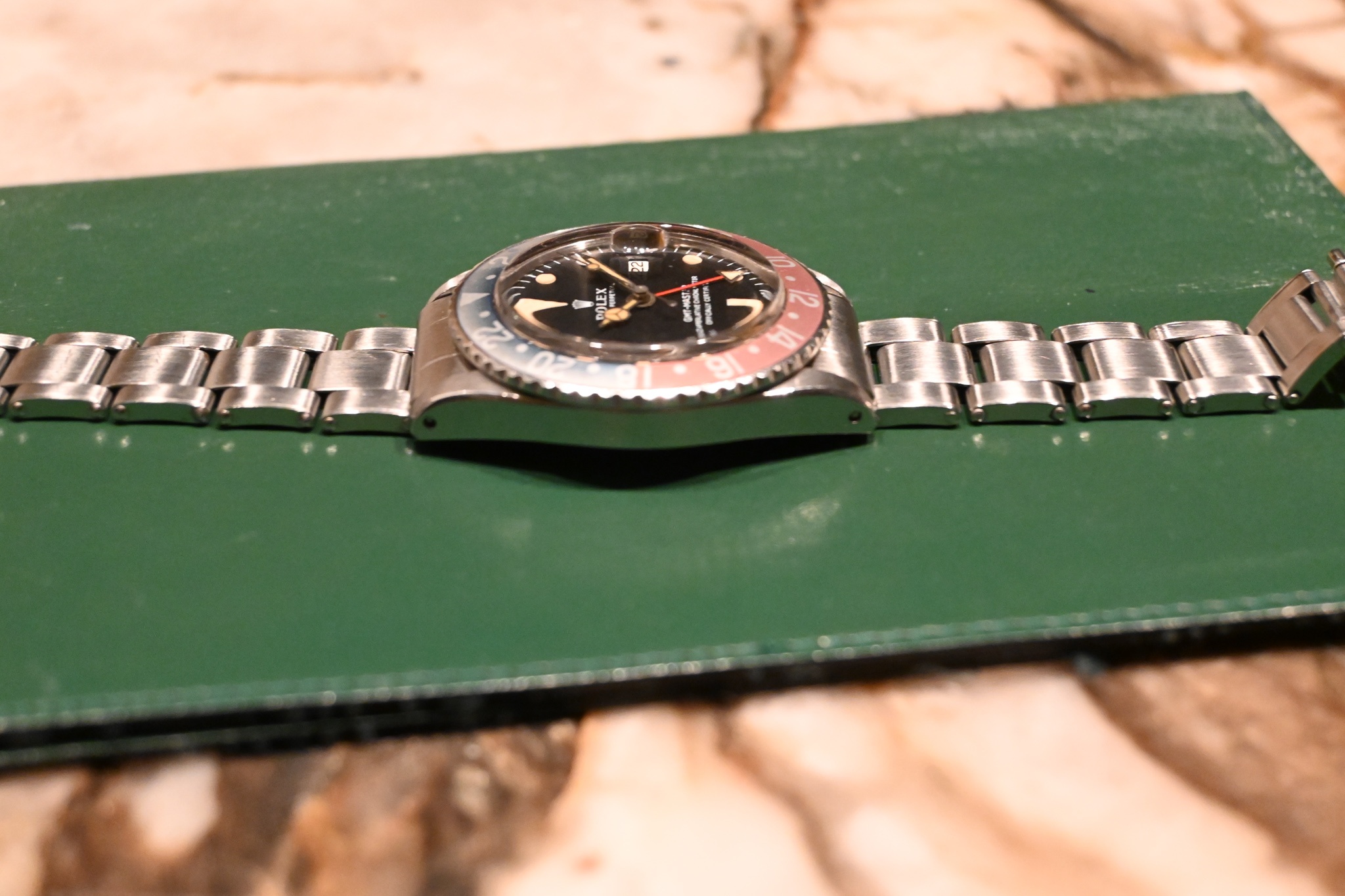
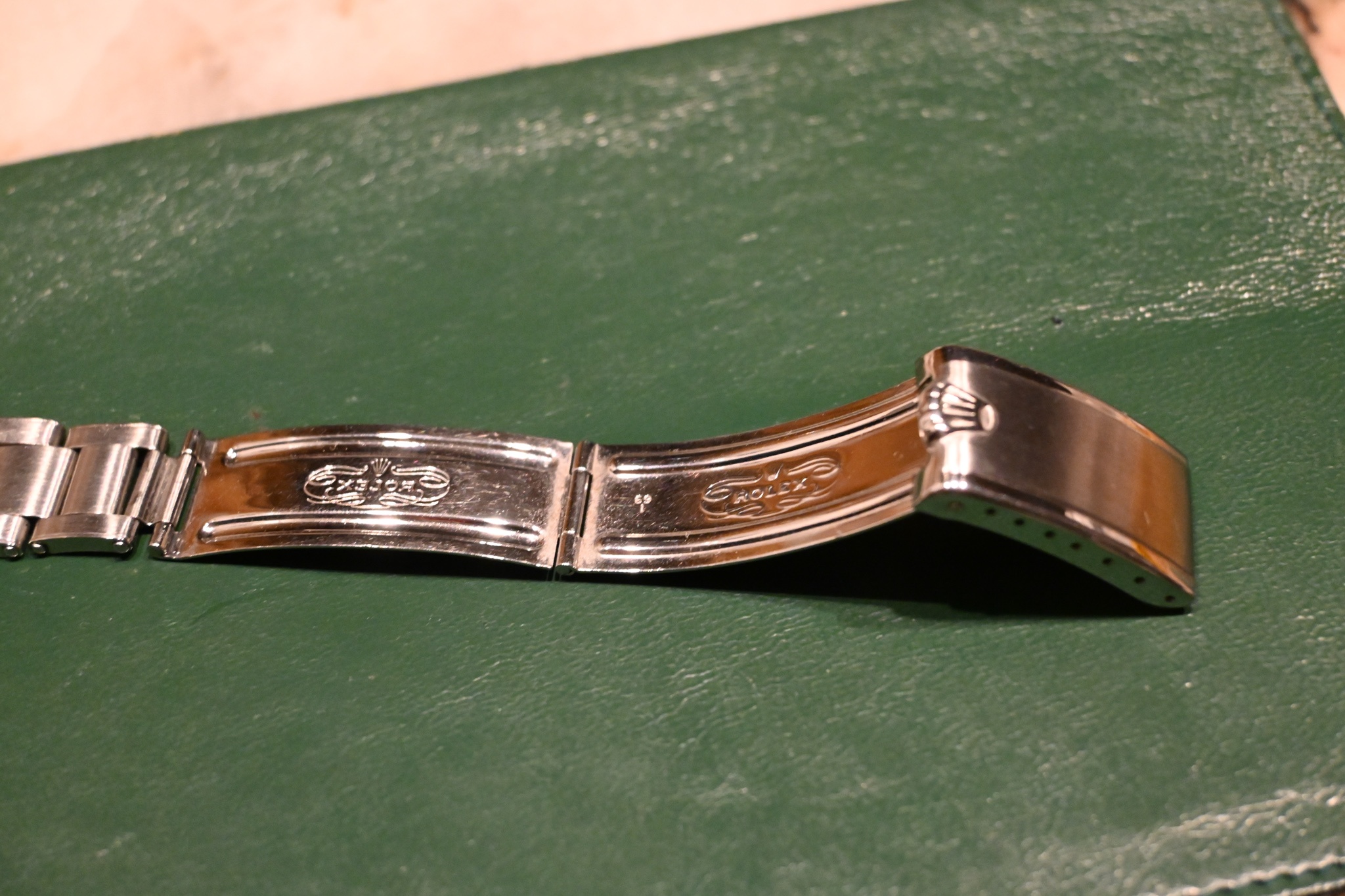
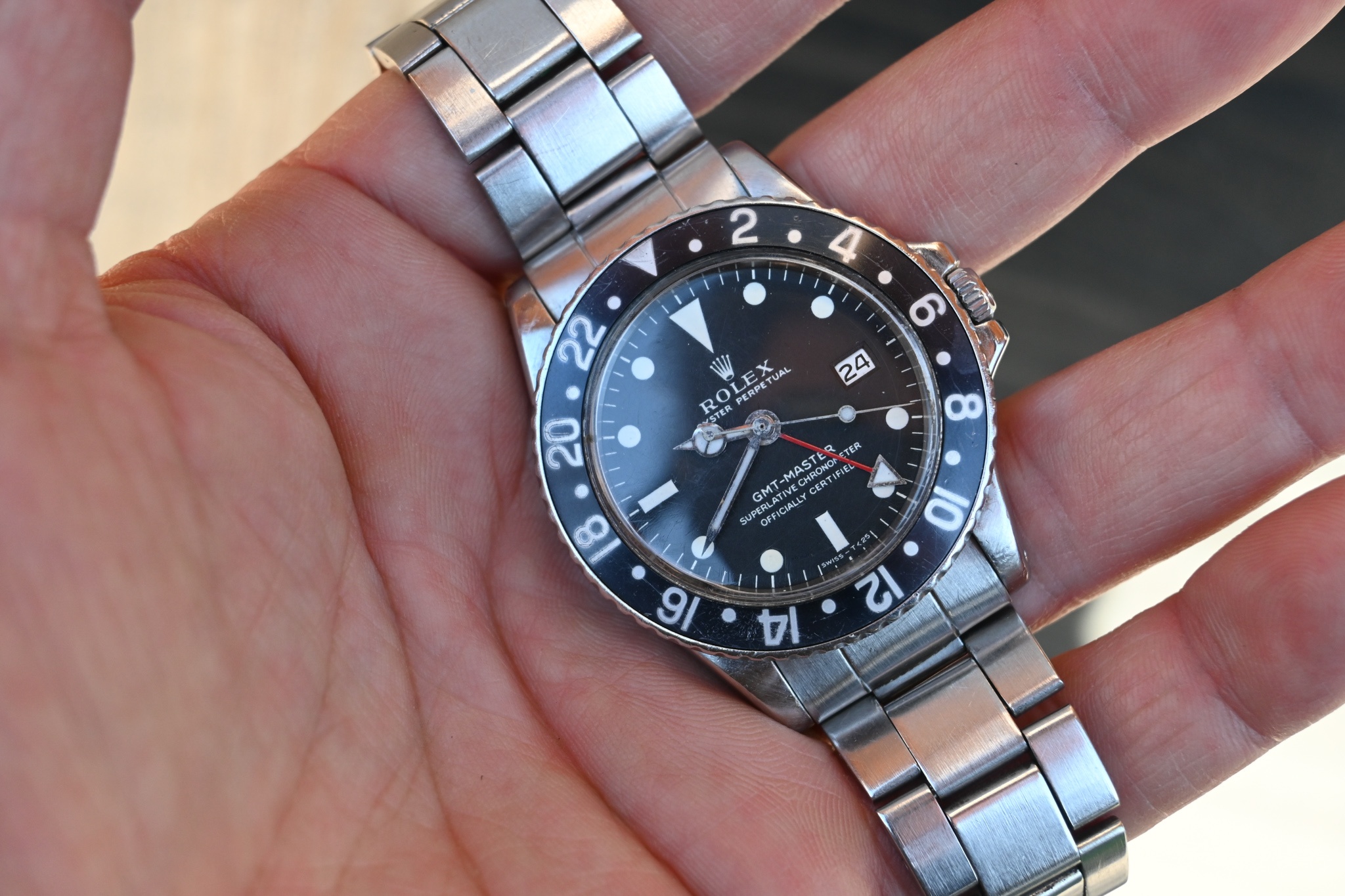
A Rolex GMT-Master reference 1675 in stainless steel with the glossy gilt dial, produced only through approximately 1966, placing this among the earliest and most characterful configurations of the reference. The gold-printed text, warm cream-patina lume plots, and early auburn Pepsi bezel insert combine to create an exceptionally cohesive vintage presentation. Correct folded-link Oyster bracelet with period signed Rolex clasp.
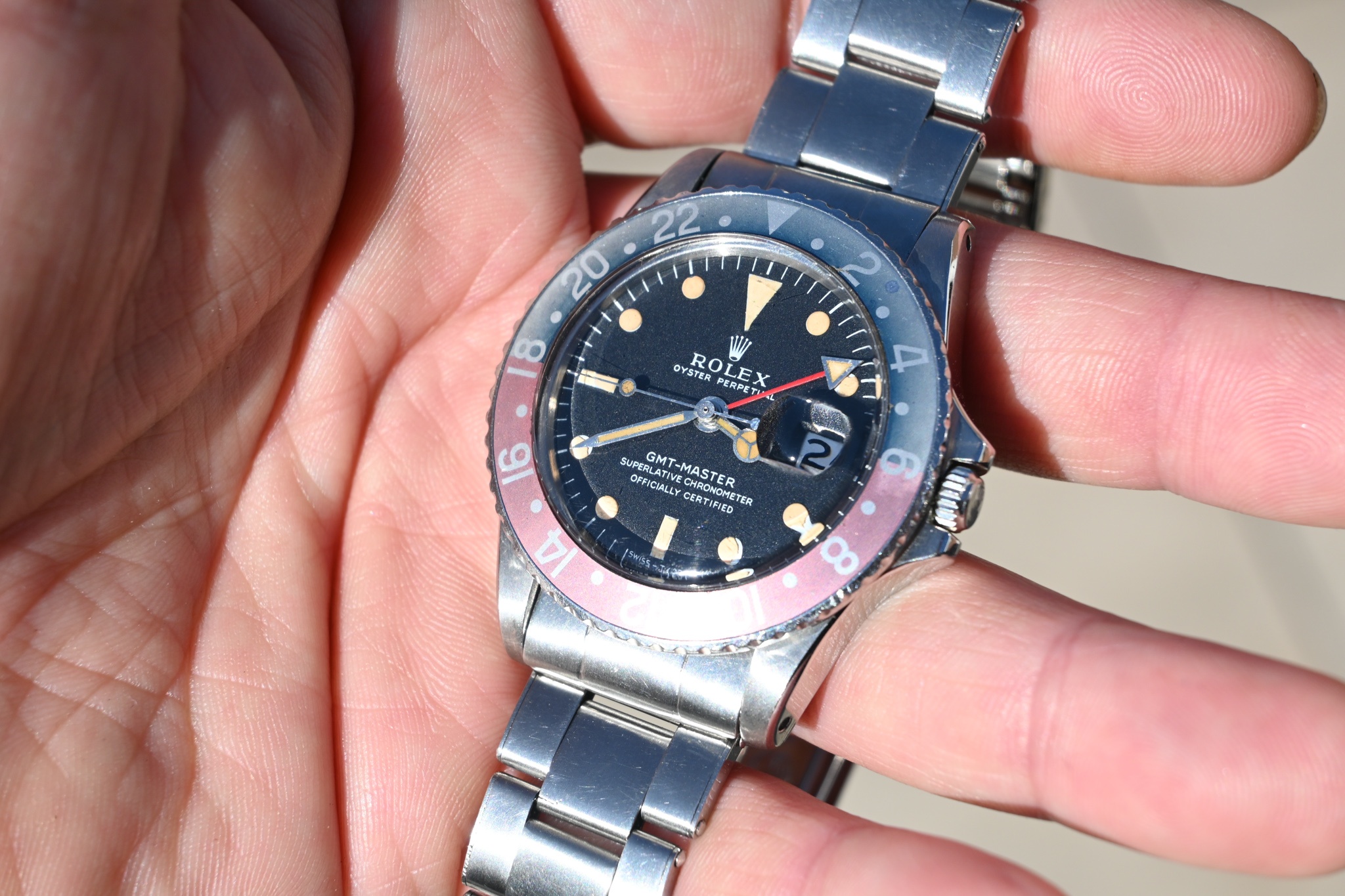
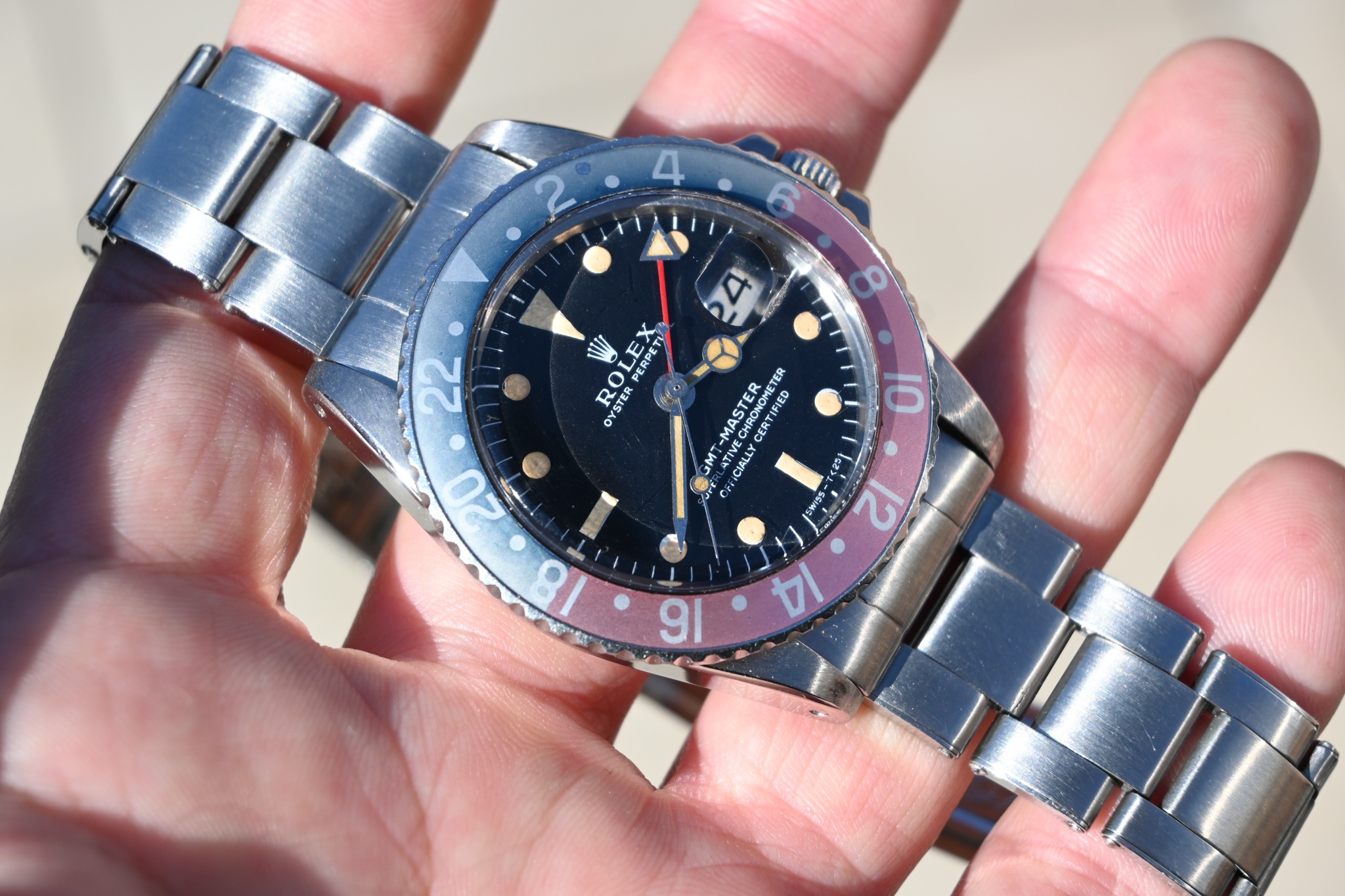
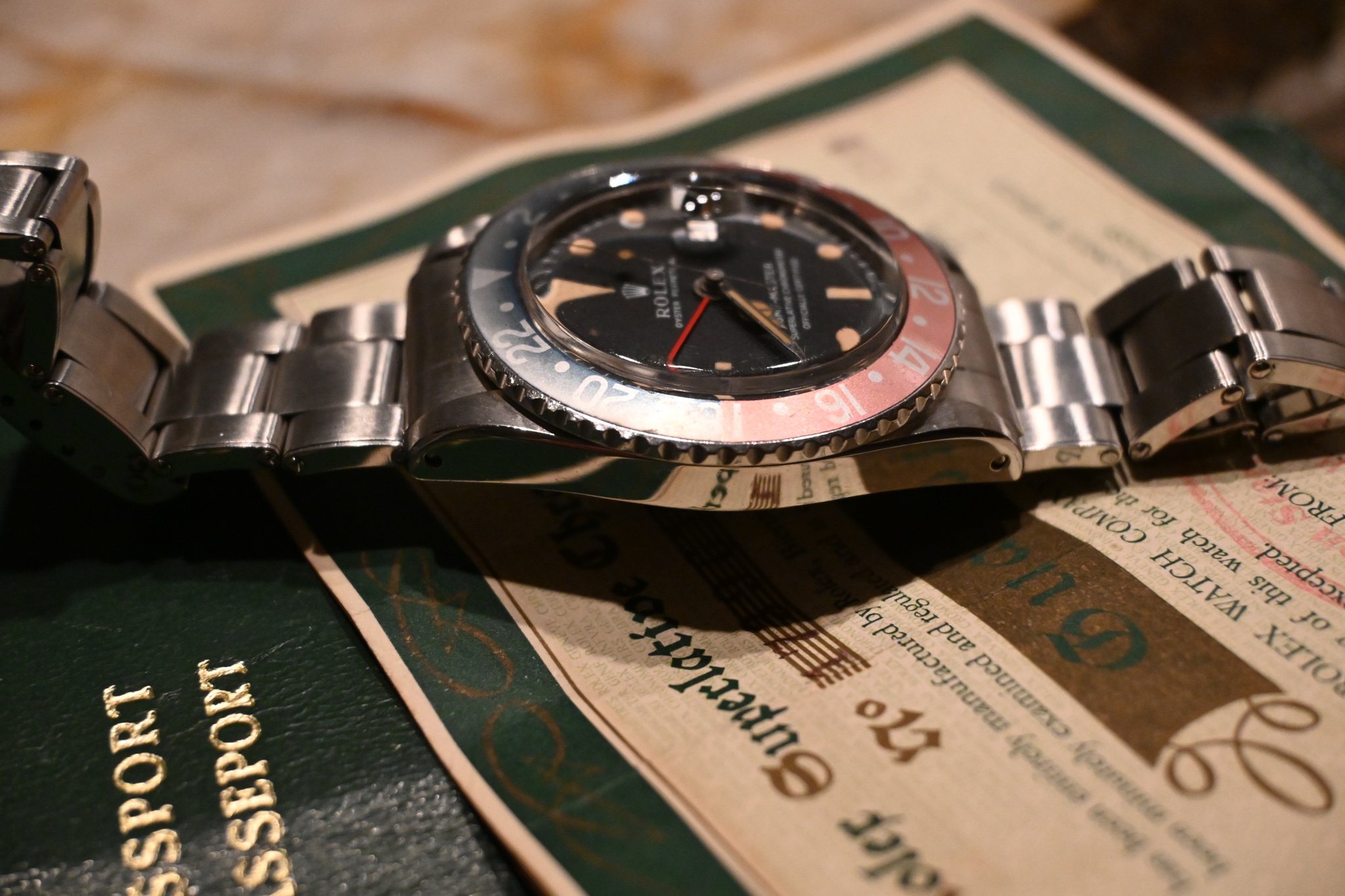
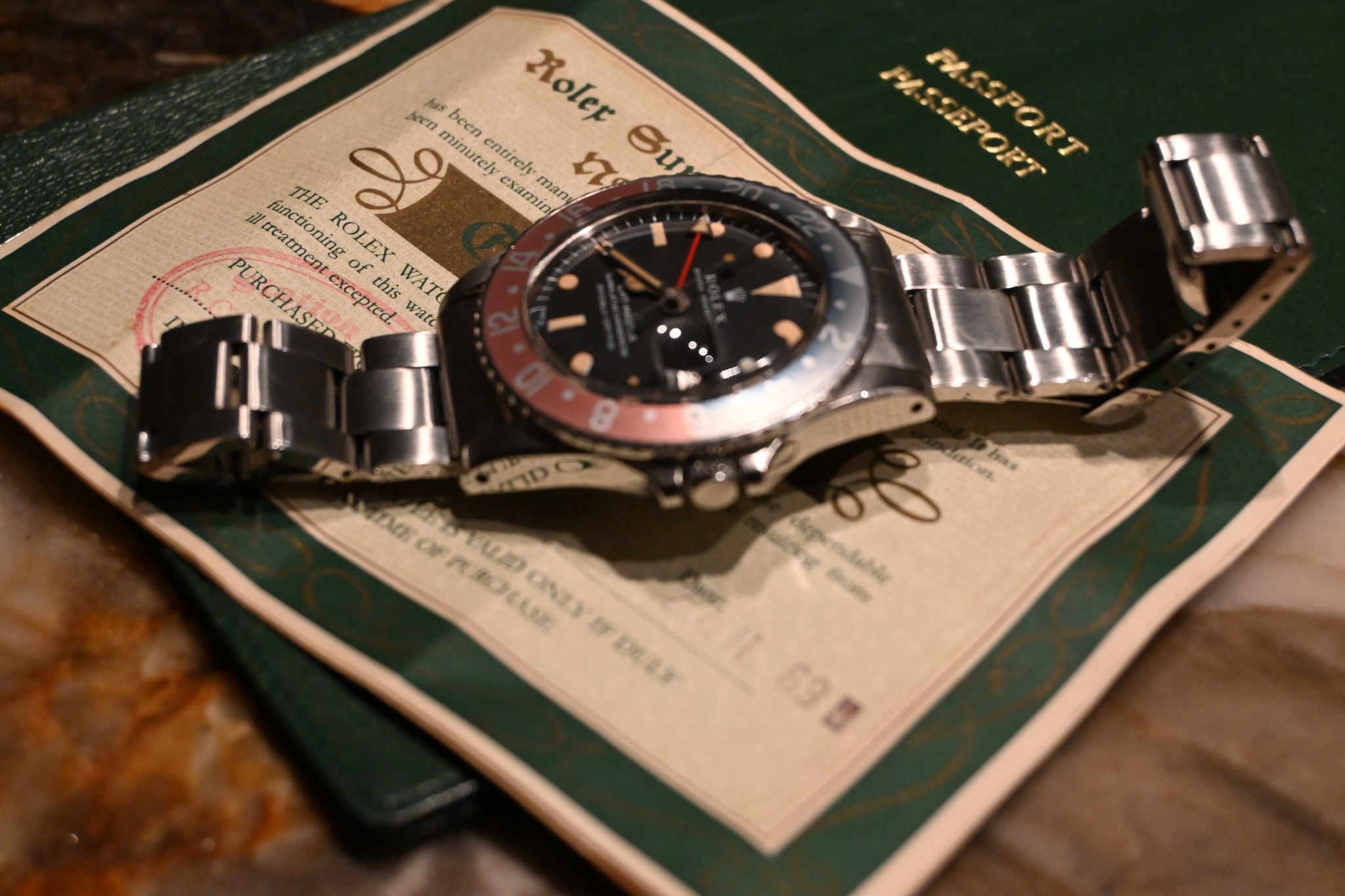
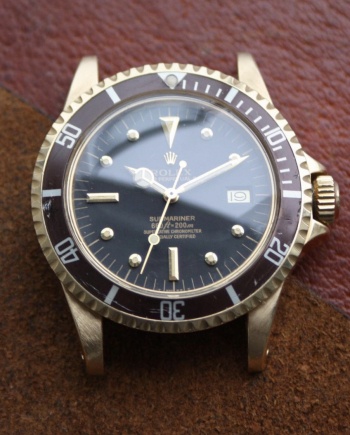
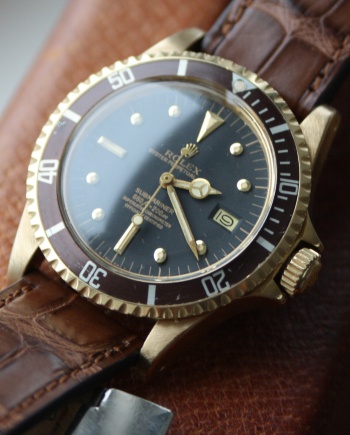
A glossy gilt dial on the Rolex GMT-Master reference 1675 is not merely a cosmetic distinction; it is a temporal one. Rolex produced gilt dials on the 1675 only through approximately 1966, when the transition to matte black dials began. Every gilt dial 1675 is therefore one of the earliest examples of the most enduring tool watch reference Rolex ever produced. This example presents in its essential and original configuration: a glossy black lacquer dial with gold-printed text that catches light with a depth and warmth no matte dial can reproduce; round luminous hour markers that have aged gracefully over six decades to a rich, creamy patina; and the classic Pepsi bezel insert. blue over red, with the auburn warmth of early anodised aluminium, above the familiar red GMT arrow hand. On a period folded-link Oyster bracelet in stainless steel, this is the GMT-Master as it was when it began: a precision tool, worn daily, worn hard, and still running.
The GMT-Master and the Age of Transcontinental Flight
The Rolex GMT-Master exists because commercial aviation created a problem that no watch had yet solved. When Pan American World Airways began operating long-haul transatlantic routes in the mid-1950s, its pilots needed a way to read home time and local time simultaneously while at altitude. Rolex’s answer, developed in collaboration with Pan Am, was the GMT-Master reference 6542 in 1954: a fourth hand tracking a second time zone against a 24-hour rotating bezel. It was not a luxury object. It was a working instrument developed in consultation with working pilots, designed to be read at a glance in a cockpit.
The reference 1675, introduced in 1959, refined the formula decisively. The case grew to 40mm; crown guards were added to protect the winding crown; the fragile bakelite bezel of the 6542 was replaced with a durable aluminium insert; and the movement was updated. For more than two decades the reference 1675 served professional pilots, military officers, engineers, and travellers worldwide. It appeared in Pan Am advertisements throughout the 1960s as the watch of the professional globetrotter, and on the wrists of countless men for whom it was simply the most capable timepiece money could buy.
The Gilt Dial – The Earliest and Most Prized Configuration
Within the reference 1675, the gilt dial variants occupy a special position. Rolex produced glossy lacquer dials with gold-printed text throughout the late 1950s and into the mid-1960s, transitioning definitively to matte black dials with white text around 1966, corresponding to approximately serial 1.6 million. Every gilt dial 1675 therefore dates to the first seven years of the reference’s production run, and carries with it the aesthetic of the era in which the GMT-Master first made its reputation.
The gilt process itself is technically demanding. The dial begins as a brass plate; text and minute markers are applied in lacquer; the surrounding surface is then chemically treated so that it turns deep, glossy black, leaving the underlying brass visible through the text. The result is lettering that appears gold, or “gilt”, in tone, with a luminous depth that is distinct from printed white text on a matte surface. When the lume in the hour markers has aged, as it has here, to a warm cream, the combination of glossy black lacquer, gilded text, and amber-toned luminous material produces an aesthetic that has become one of the most coveted in vintage watch collecting.
The Dial
The glossy black lacquer surface retains its depth and gloss across six decades of life. Gold-printed text, “Rolex / Oyster Perpetual / GMT-Master / Superlative Chronometer / Officially Certified” — sits on the dial with the characteristic warmth of the gilt process. Round luminous hour markers, puffy with the distinctive “zinc sulphide” lume of mid-1960s production, have developed a warm cream patina that reads richly against the black surface. The red arrow GMT hand picks out the second time zone with the deliberate precision for which the reference was designed. The Pepsi bezel insert, with the warm auburn of an early aluminium anodisation above the vivid blue, completes the palette of an early 1675 in honest, original condition.
Specifications
Brand: Rolex
Model: GMT-Master Automatic (ref. 1675)
Year: circa 1960s
Case material: Stainless steel
Case diameter: approx. 40 mm
Bezel: Bi-directional rotating 24-hour bezel with Pepsi aluminium insert
Dial: Glossy gilt black dial with gold-printed text and cream-patina luminous hour markers
Strap: Stainless steel folded-link Oyster bracelet with signed Rolex clasp
Movement: Automatic – Rolex Calibre 1565 or 1575
Condition: Good vintage condition with light signs of wear consistent with age
Accessories: Watch, passport, and papers
Warranty: 1 year warranty
Availability
This vintage day-date automatic watch is available through Vintage Times Amsterdam.
For further information or high-resolution images, please feel free to contact:
Vintage Times
Vintage Times Amsterdam is a small watch boutique who mainly deals online and with a select group of private collectors. We are constantly looking for rare vintage timepieces and try to present the best condition available. Please don’t hesitate to get in contact for more information about this watch or other timepieces from our collection. We ship worldwide and also welcome you for a visit at our office in Amsterdam.


 View Product
 View Product
 View Product
 View Product
 View Product
 View Product
 View Product
 View Product
 View Product
 View Product
 View Product
 View Product