Vintage Automatic Rolex GMT-Master Faded Pepsi Bezel Steel circa 1970s
Sold
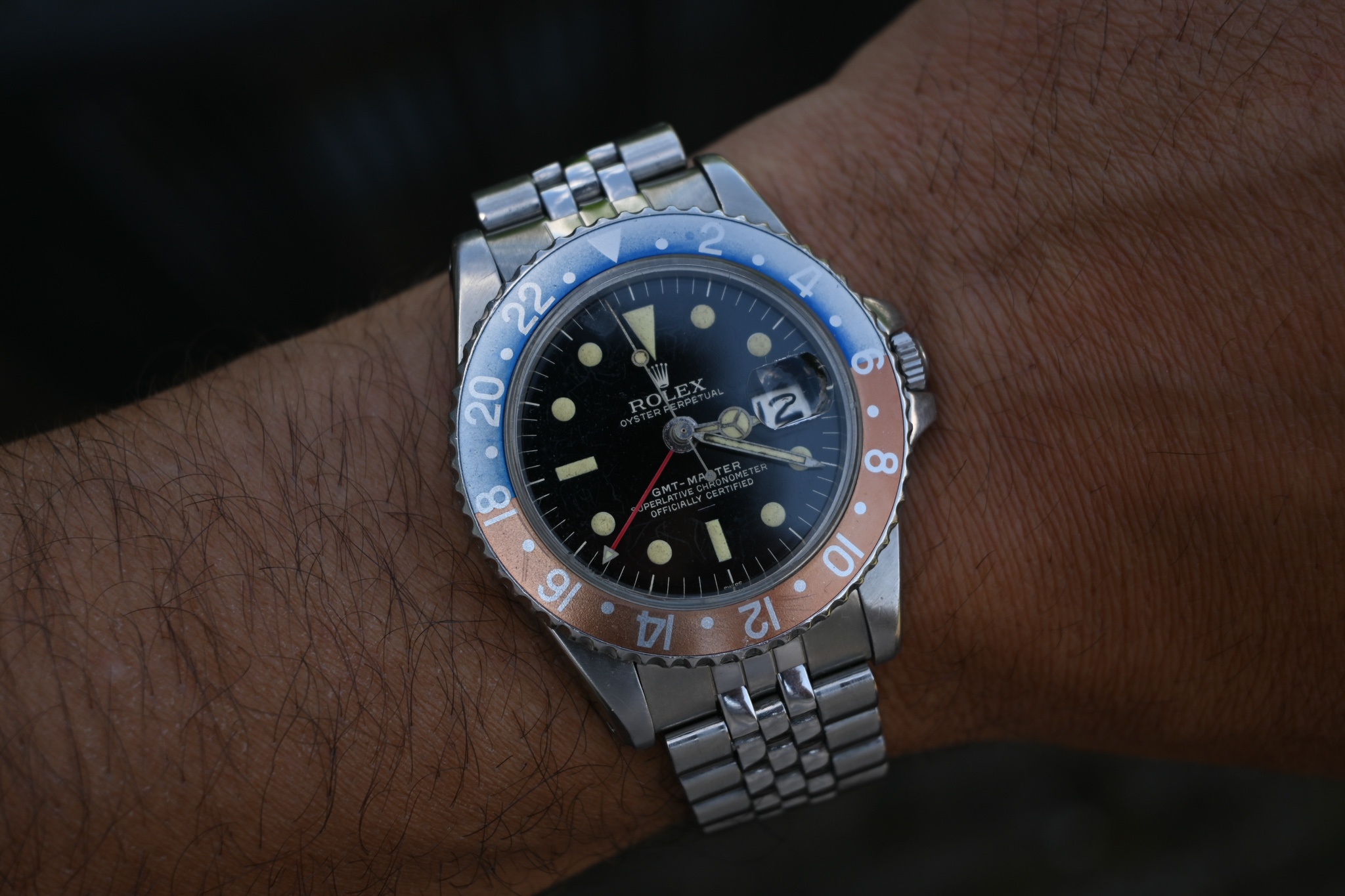
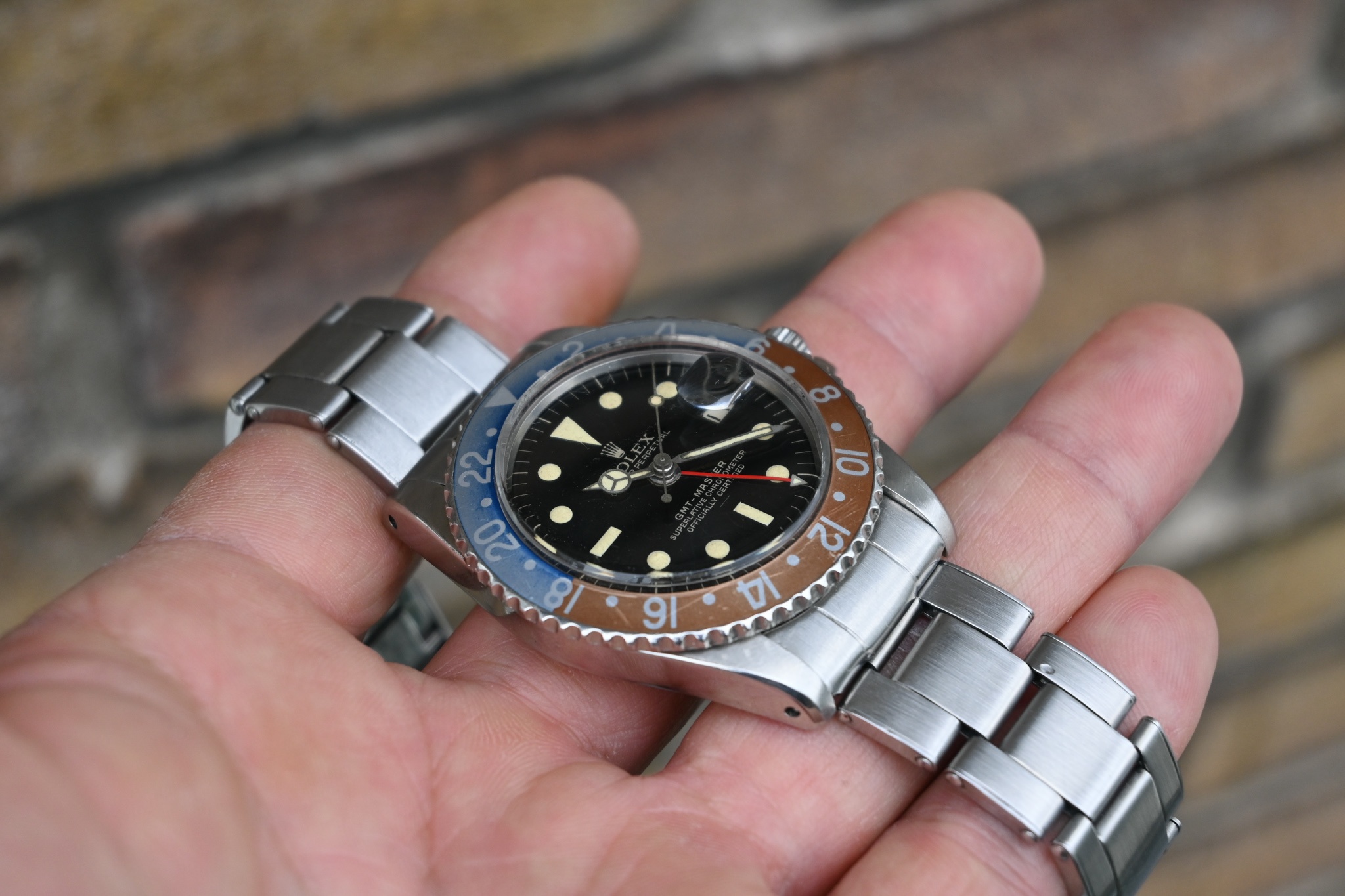
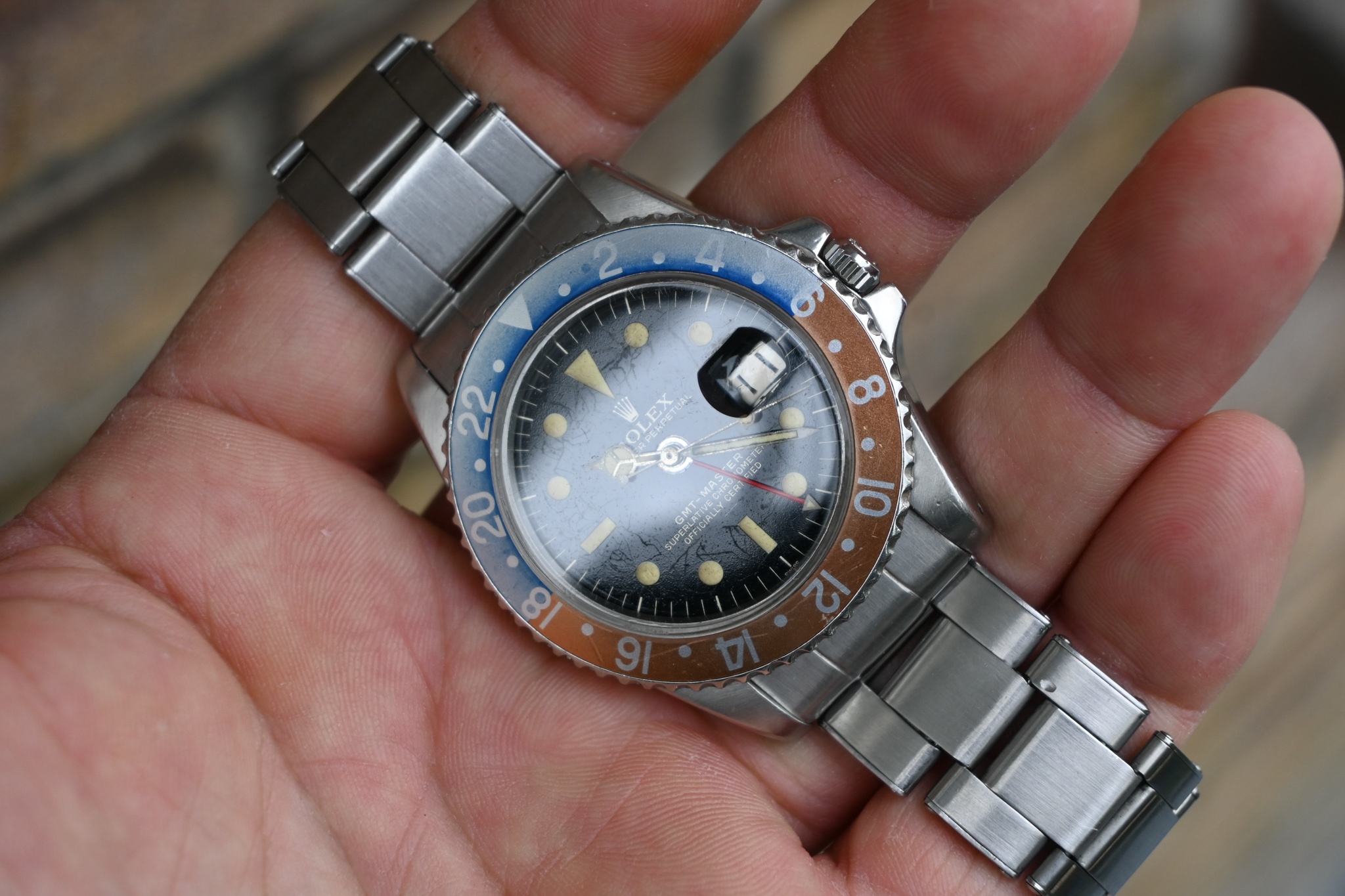
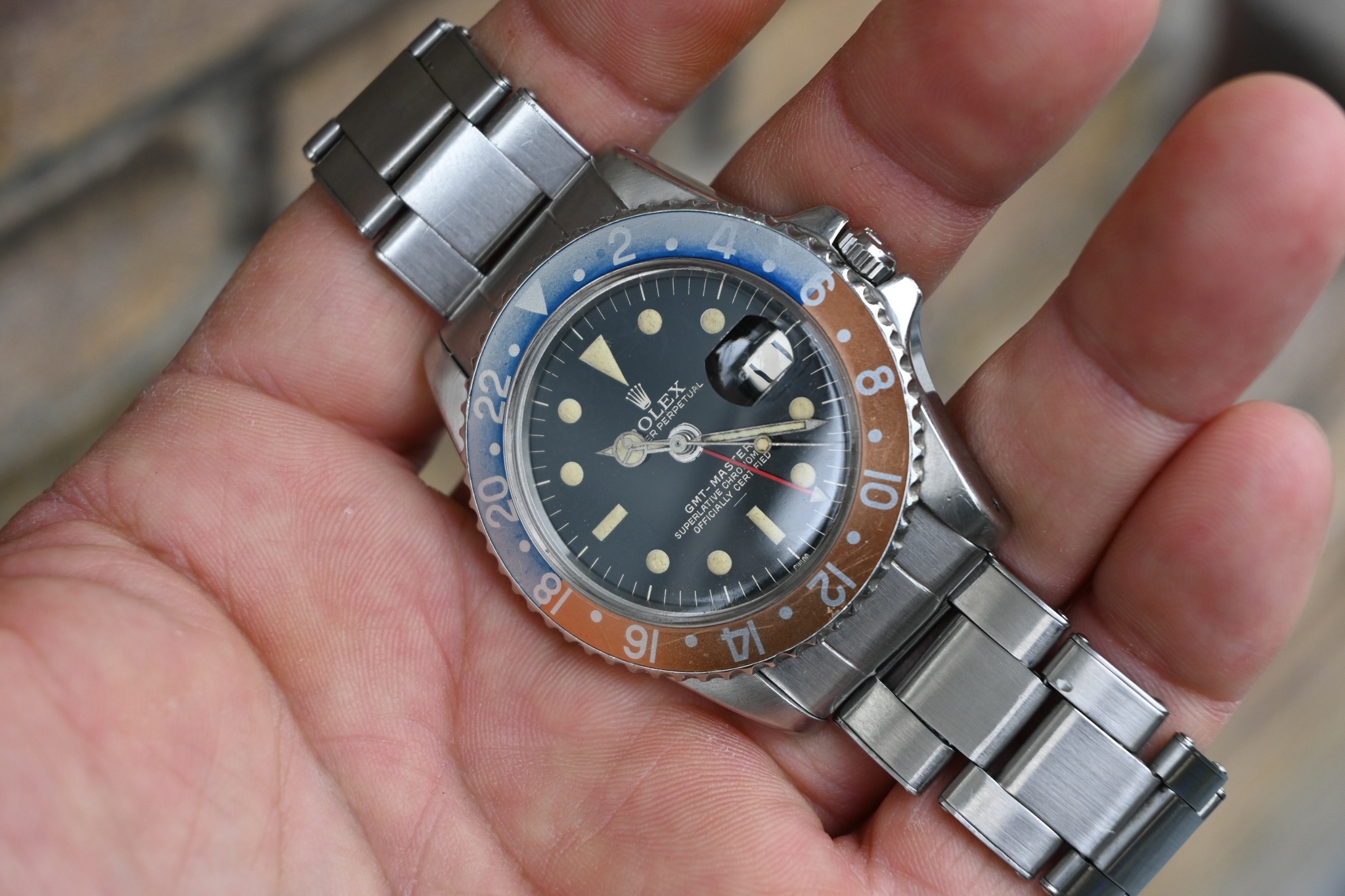
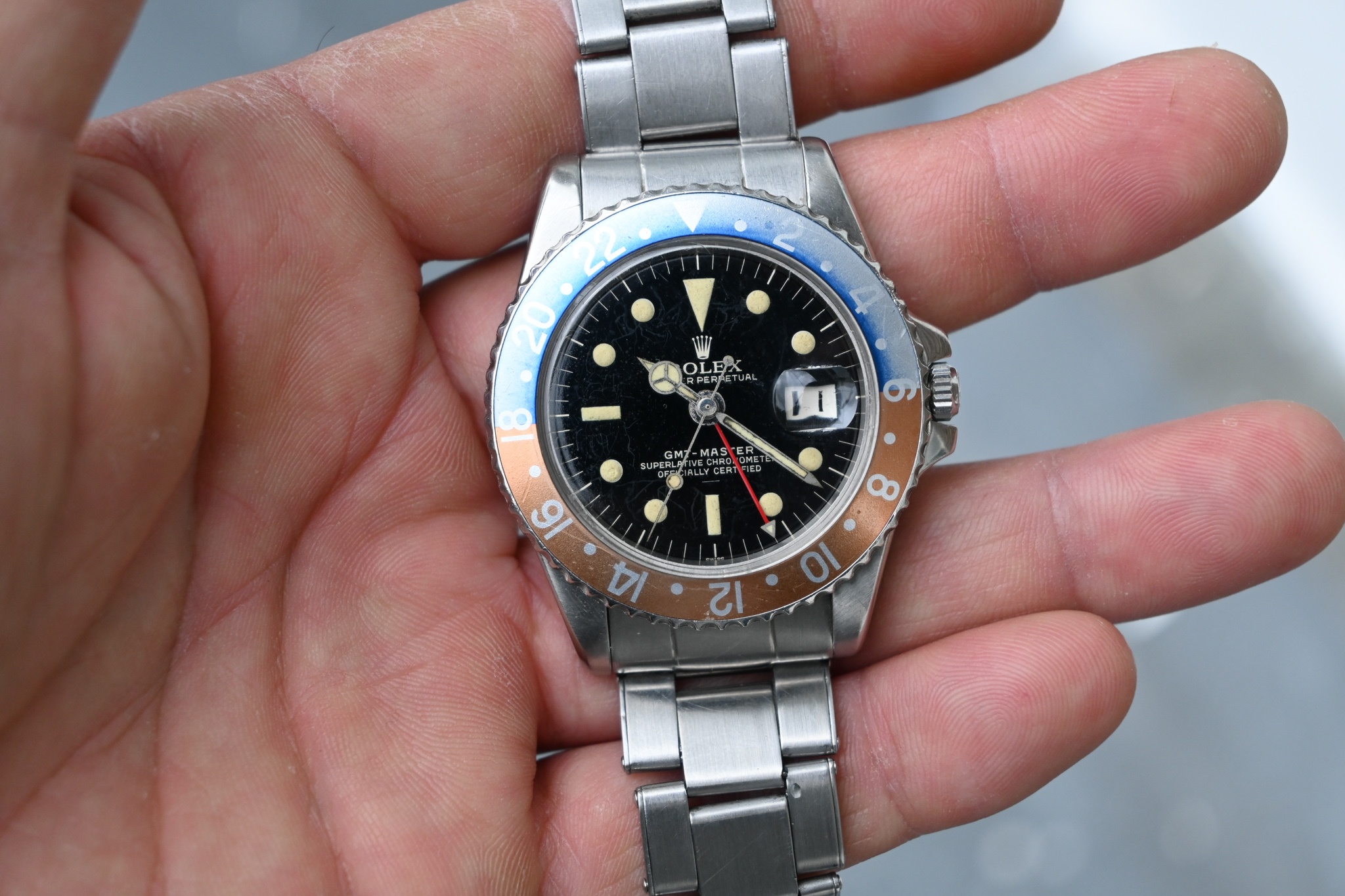
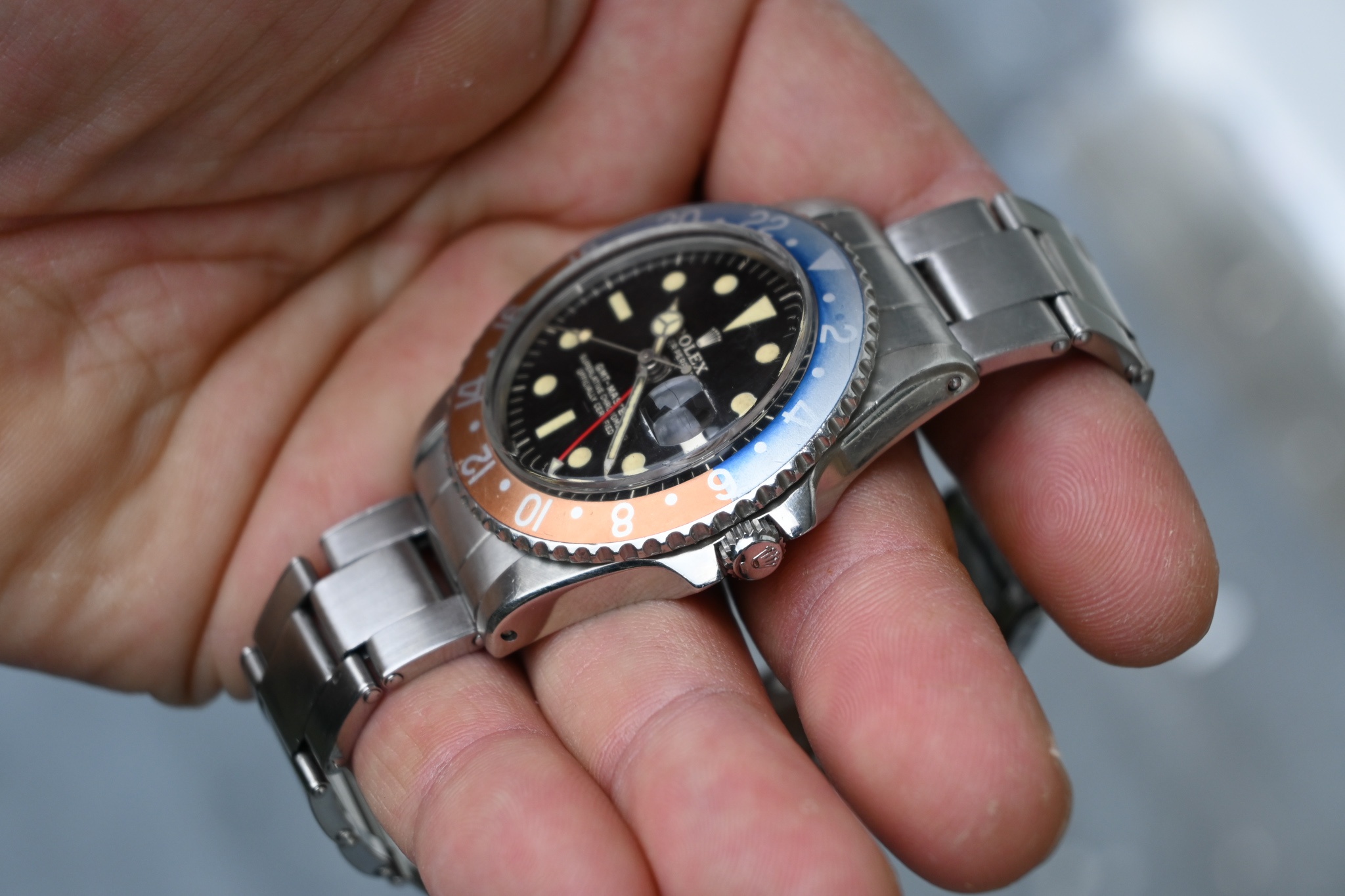
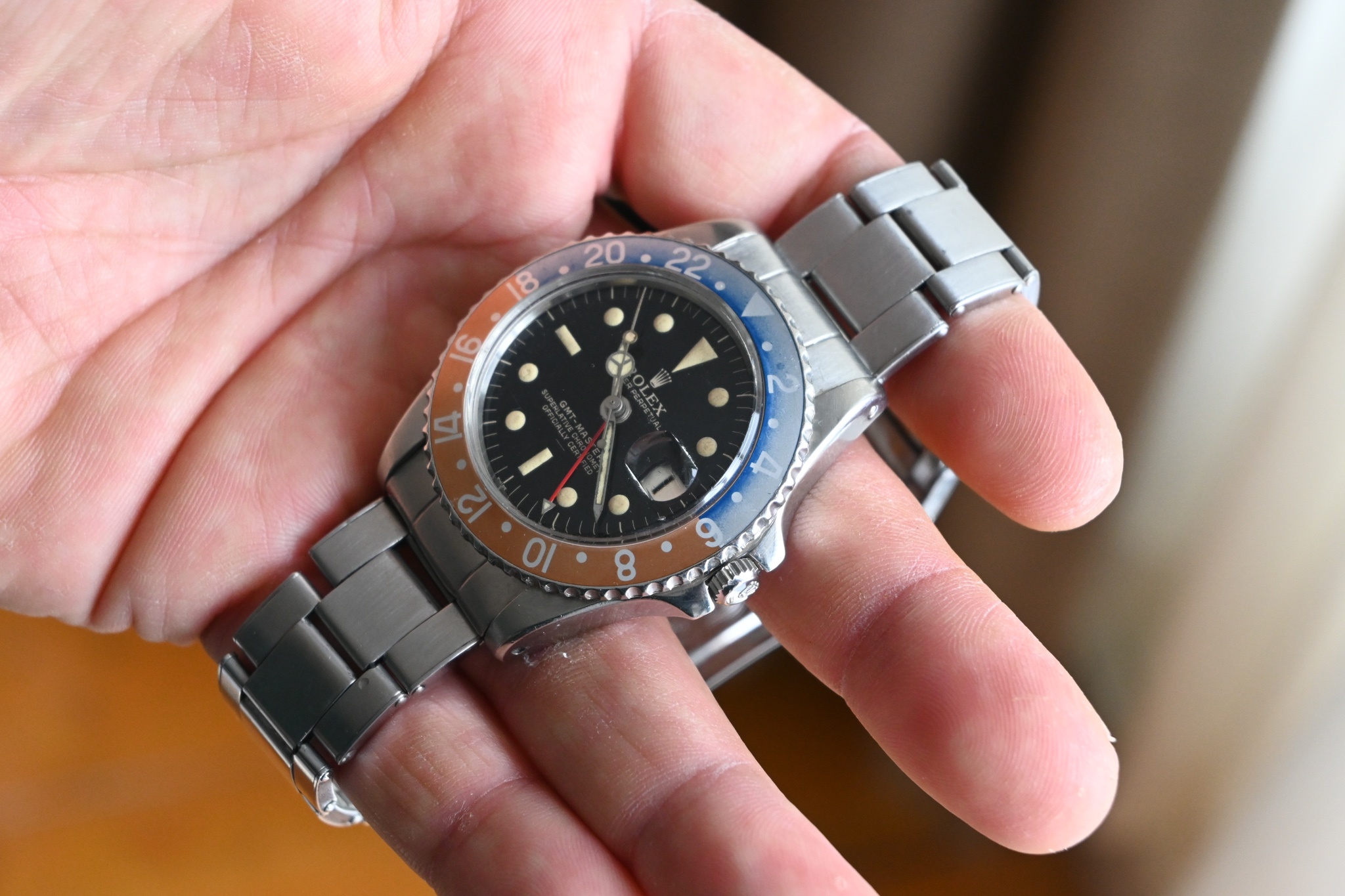
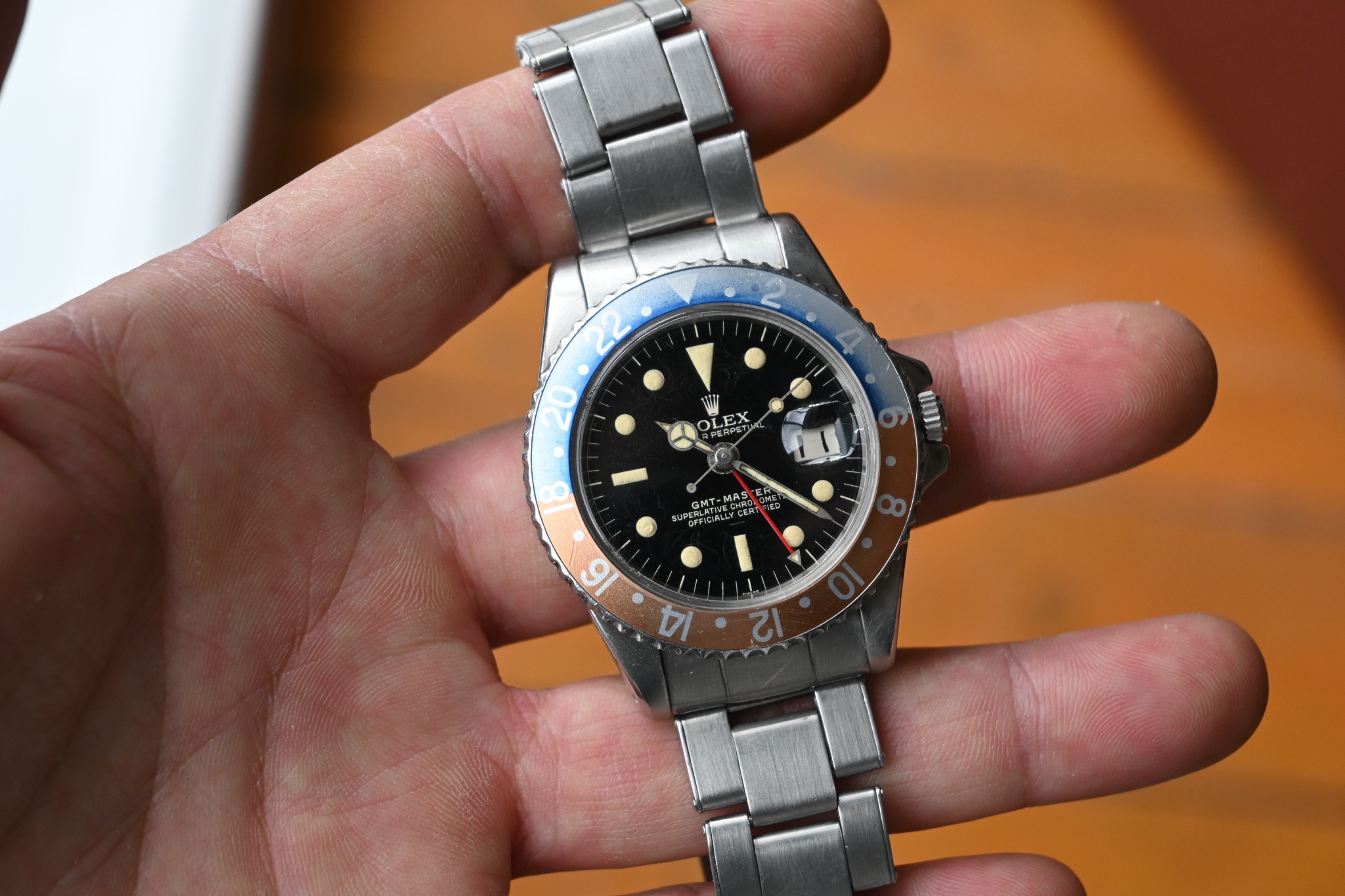
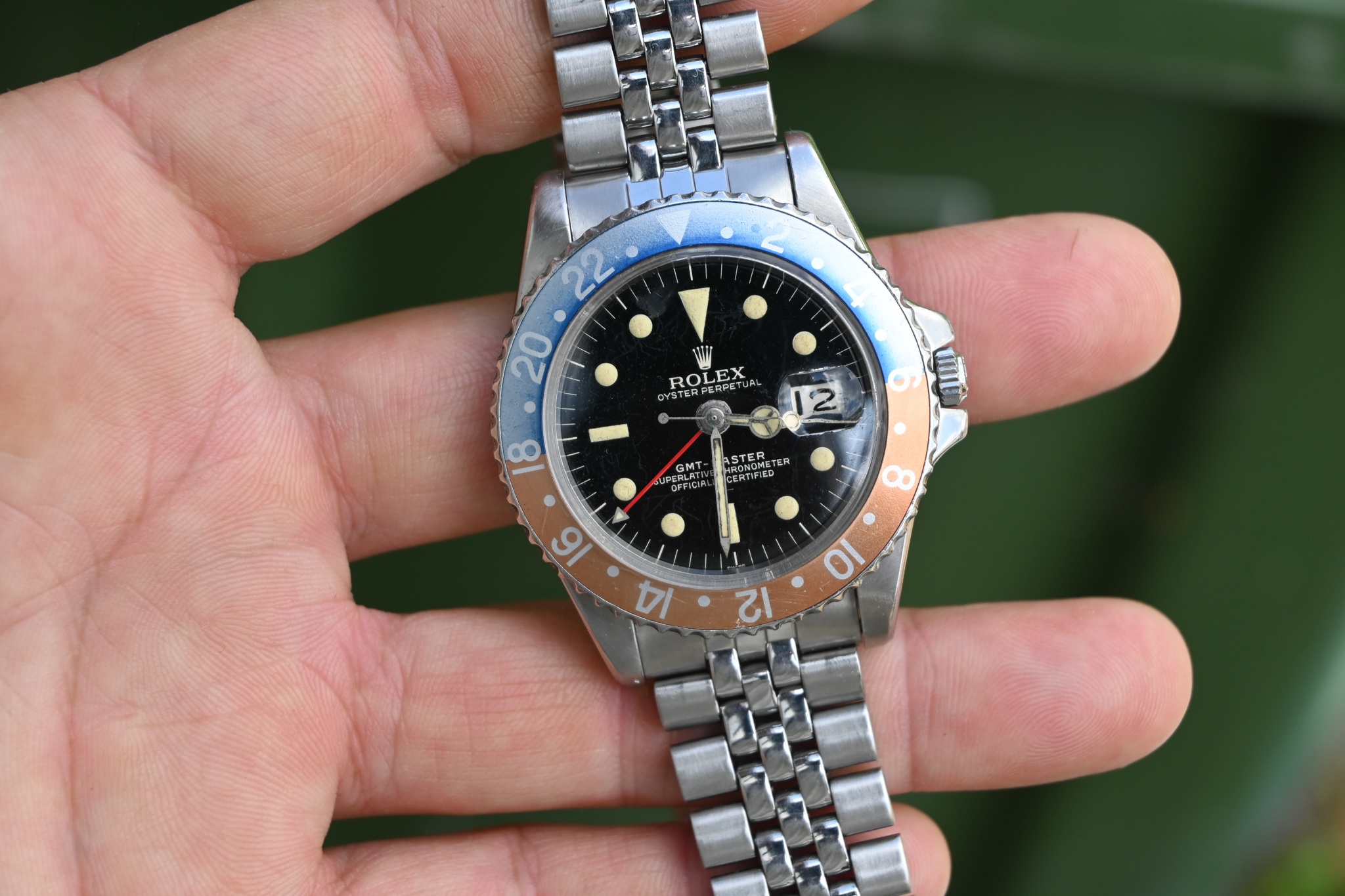
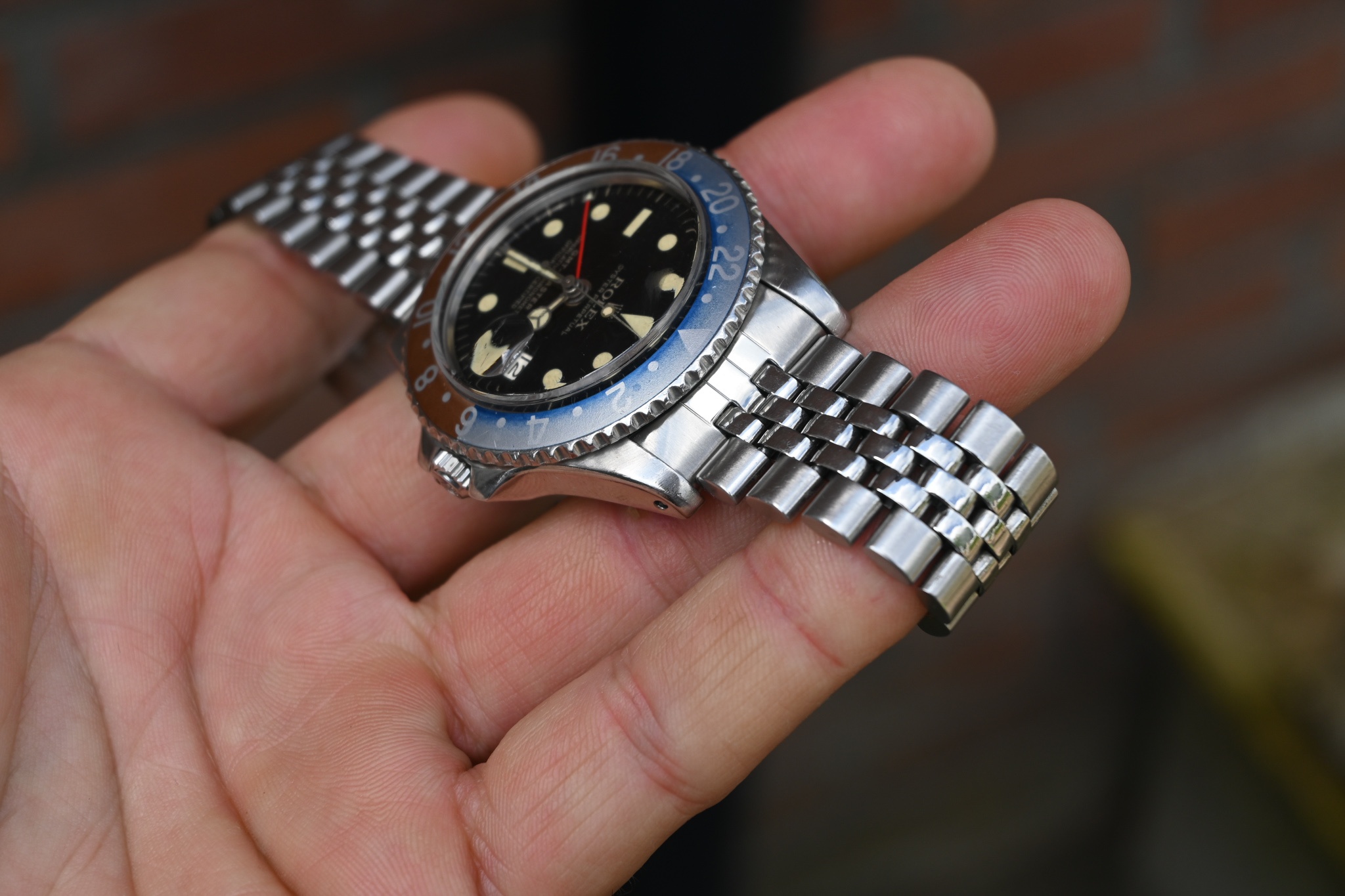
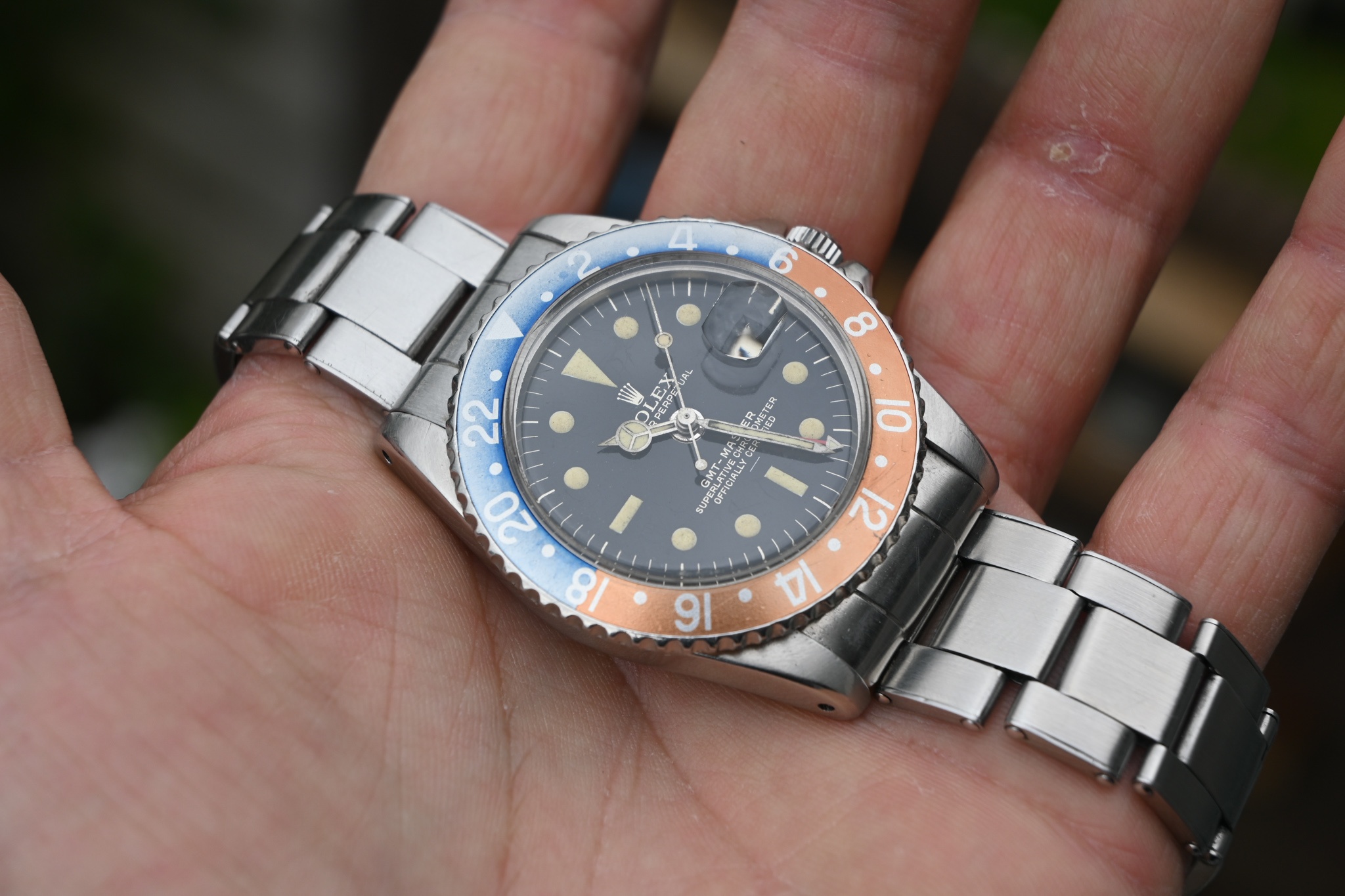
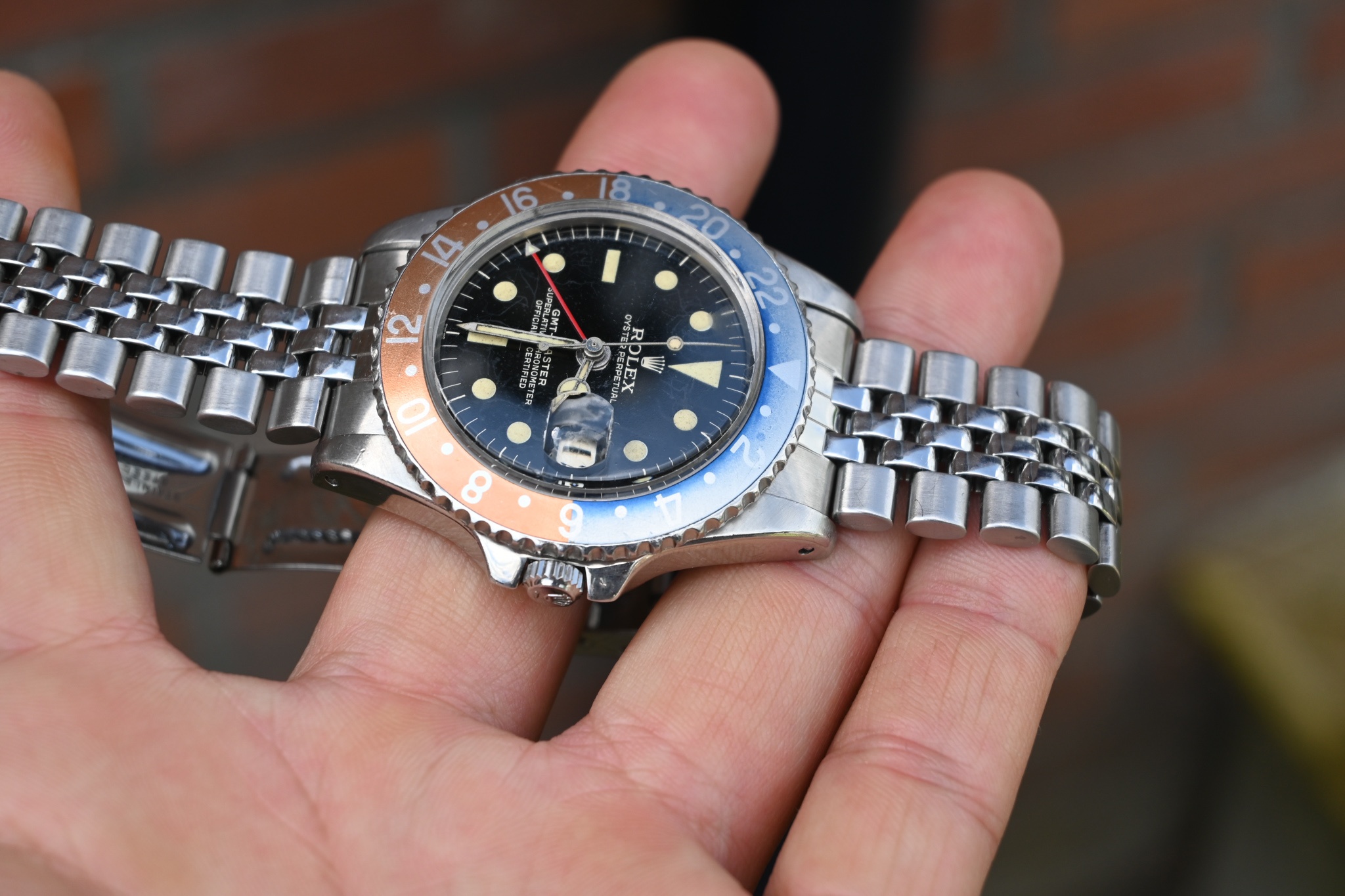
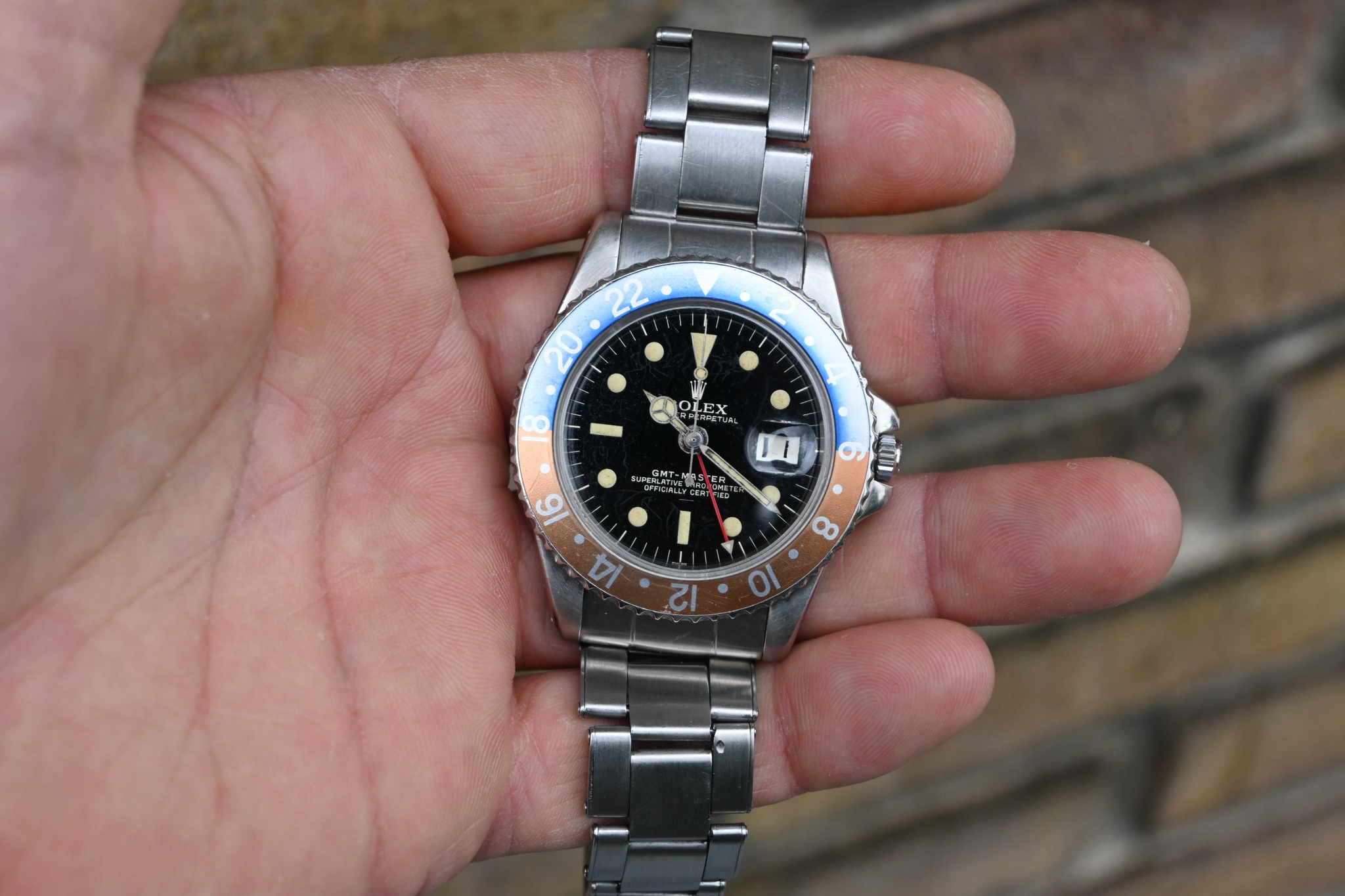
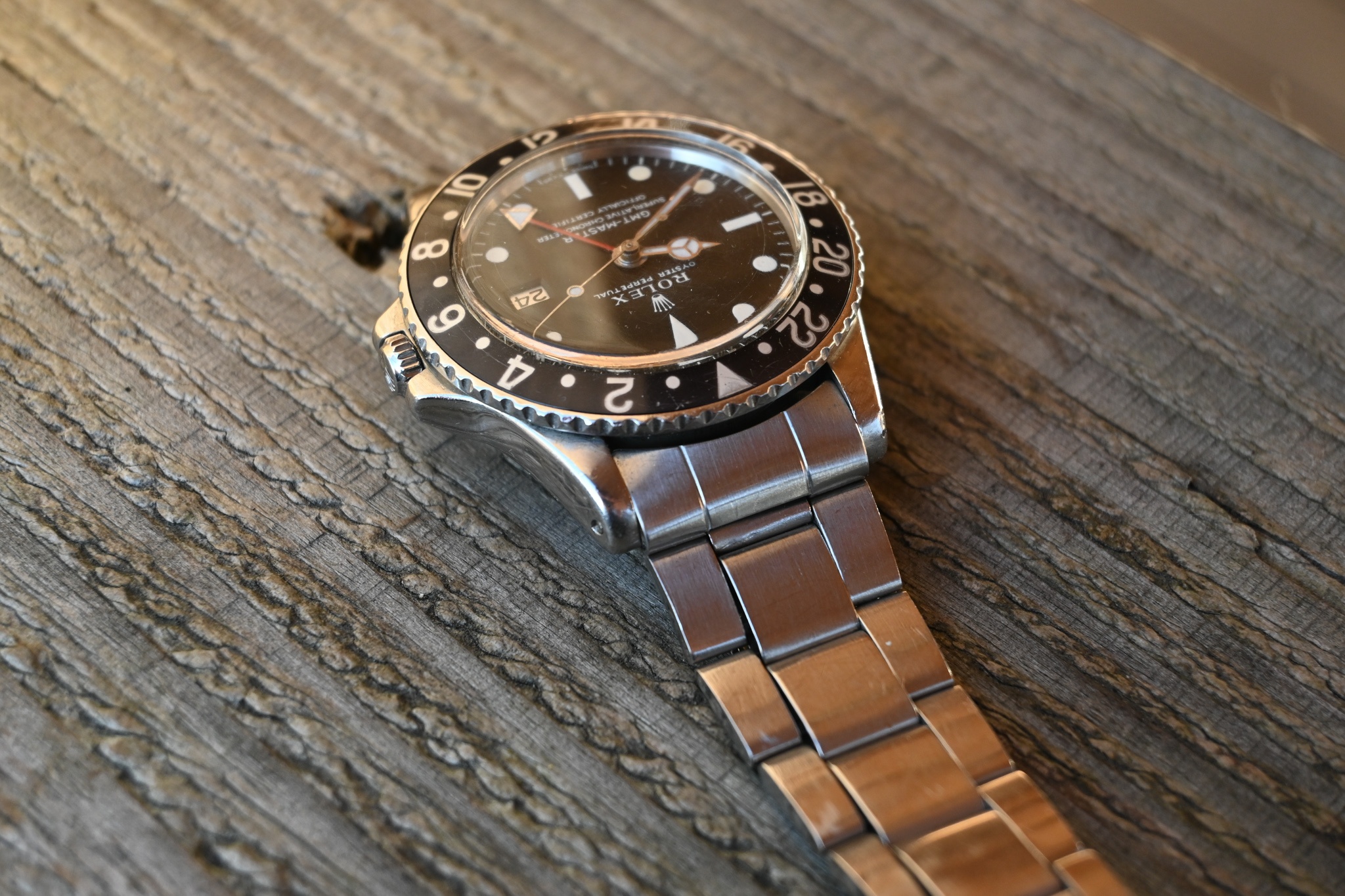
A late production Rolex GMT-Master reference 1675 in stainless steel, presenting a naturally faded Pepsi bezel insert where the red half has transformed into a striking warm orange-brown tangerine over decades of wear, while the blue half remains vivid. Large rectangular luminous markers on the matte black dial have aged to a deep, cohesive amber, one of the most appealing vintage patina combinations in the 1675 reference. Automatic Calibre 1575 on a period solid-link Oyster bracelet.
Time does things to a Rolex GMT-Master bezel that no factory process can replicate. This reference 1675, produced in the late 1970s, carries a Pepsi bezel insert that has faded over decades of exposure into a configuration more visually arresting than anything it started as: the upper half retains its vivid, saturated blue, while the lower half has aged from the original red into a warm orange-brown that collectors often describe as tangerine or petrol. The result is a bicolour bezel of remarkable visual richness, unexpected, distinctive, and entirely the product of time. Paired with a matte black dial whose large rectangular luminous hour markers have aged to a deep, cohesive amber, and wearing a solid-link Oyster bracelet on a well-preserved stainless steel case, this GMT-Master communicates the physical history of a tool watch that has been worn, appreciated, and lived in for half a century.
The GMT-Master and the Age of the Professional Traveller
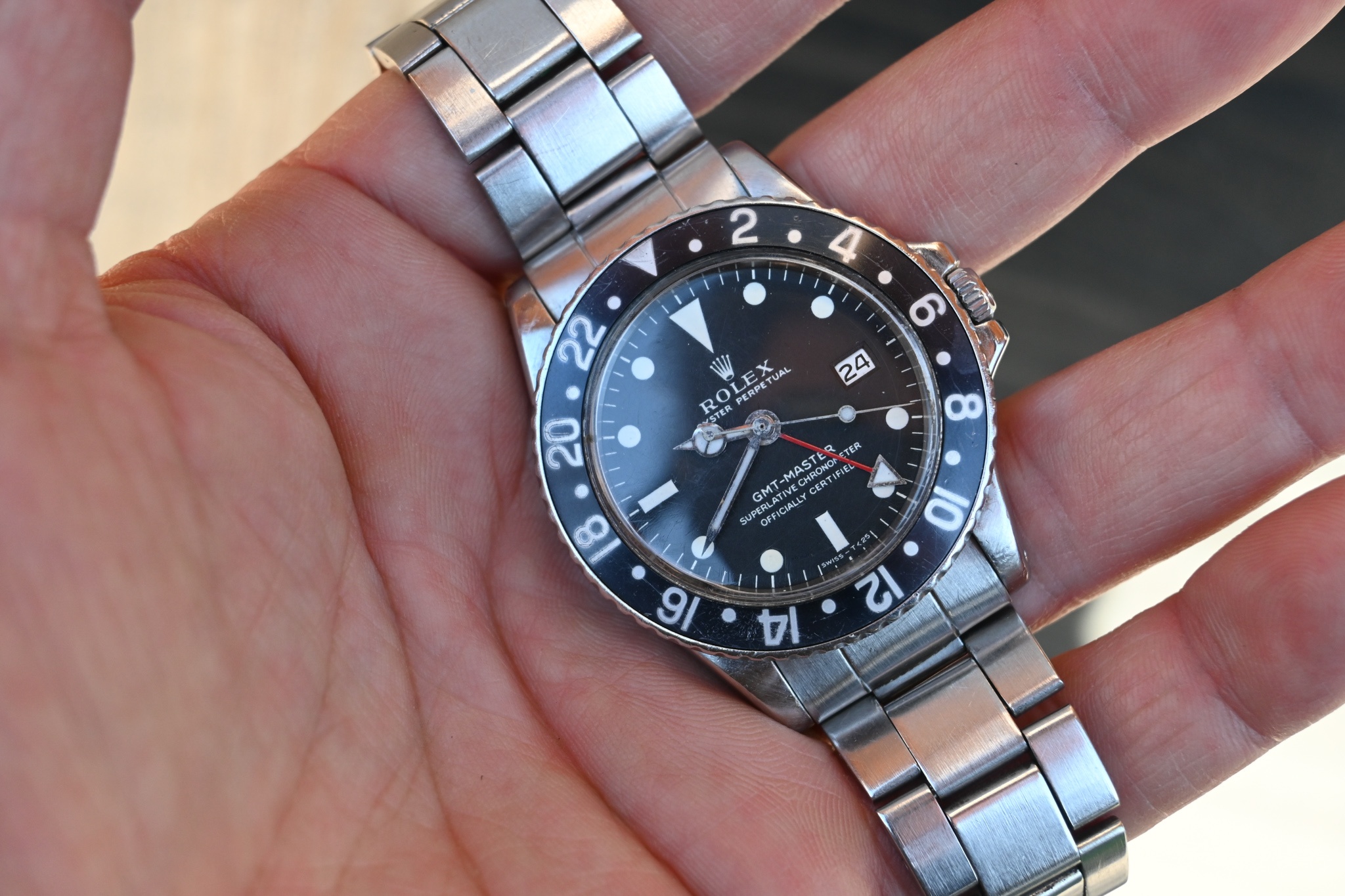
The Rolex GMT-Master was conceived in partnership with Pan American World Airways in the mid-1950s to give professional pilots the ability to read two time zones simultaneously in the cockpit. The reference 1675, introduced in 1959 and produced until 1980, refined the original formula into what became the definitive mid-century travel watch: a 40mm stainless steel Oyster case with crown guards, a bidirectional 24-hour rotating aluminium bezel in red and blue, and a fourth arrow hand tracking a second time zone against the bezel’s graduations. For more than two decades, it served pilots, military officers, engineers, and travelling professionals worldwide, and accumulated the kind of patina that only genuine use across genuine decades can produce.
The late production years of 1675, roughly 1974 to 1979, brought several changes that distinguish these examples from their earlier siblings. The dial indices grew larger, the lume plots more prominent, and the solid-link Oyster bracelet replaced the folded-link of earlier production, adding both substance and longevity. It is in these final years that the 1675 reached its most refined state, everything in the design settled, and the result is a watch that wears with a confidence and physicality that the earlier, slimmer examples do not quite match.
What the Bezel Becomes – The Art of Natural Ageing
The red half of an aluminium Pepsi bezel does not age predictably. Depending on the batch of anodising, the conditions of wear, and the chemistry of decades, it fades along a spectrum: some inserts hold their red; others shift to an auburn brick-tone; and others, like this one, undergo a more dramatic transformation into the warm orange-brown that collectors call tangerine or petrol. The blue half, protected by a more stable dye, typically holds its colour through this process, creating a bicolour contrast that is more striking, in a different register, than the factory original. No two bezel inserts fade identically. The one on this watch is its own, singular object, a record of the specific light, wear, and time it has experienced.
The deep amber of the lume in the hour markers and hands completes the picture. Long-faded tritium, having spent decades oxidising inside the dial, has reached a colour that harmonises perfectly with the orange of the bezel, warm, rich, and unmistakably vintage. It is the kind of cohesive ageing that collectors spend years searching for and rarely find assembled this completely on a single watch.
The Dial
The matte black surface is clean and well-preserved. Large, substantial rectangular luminous hour markers fill the dial with a presence that the round plots of earlier 1675s do not project; they catch light broadly and read with immediate legibility at any angle. The Mercedes-style hour hand and the red GMT arrow hand sweep the dial with the purposeful economy of a tool designed to be used. At 3 o’clock, the Cyclops-magnified date window frames the date in the characteristic Rolex style. The acrylic crystal above contributes to the warm, slightly domed optical character of this generation of GMT-Master, a quality retired when sapphire replaced it on the subsequent 16750.
Dial: Matte black dial with large rectangular luminous hour markers and aged amber patina
Strap: Stainless steel solid-link Oyster bracelet with signed clasp
Movement: Automatic – Rolex Calibre 1575
Condition: Good vintage condition with light signs of wear consistent with age
Accessories: Watch only (no box or papers)
Warranty: 1 year warranty
Availability
This vintage day-date automatic watch is available through Vintage Times Amsterdam.
For further information or high-resolution images, please feel free to contact:
Vintage Times
Vintage Times Amsterdam is a small watch boutique who mainly deals online and with a select group of private collectors. We are constantly looking for rare vintage timepieces and try to present the best condition available. Please don’t hesitate to get in contact for more information about this watch or other timepieces from our collection. We ship worldwide and also welcome you for a visit at our office in Amsterdam.


 View Product
 View Product
 View Product
 View Product
 View Product
 View Product
 View Product
 View Product
 View Product
 View Product
 View Product
 View Product