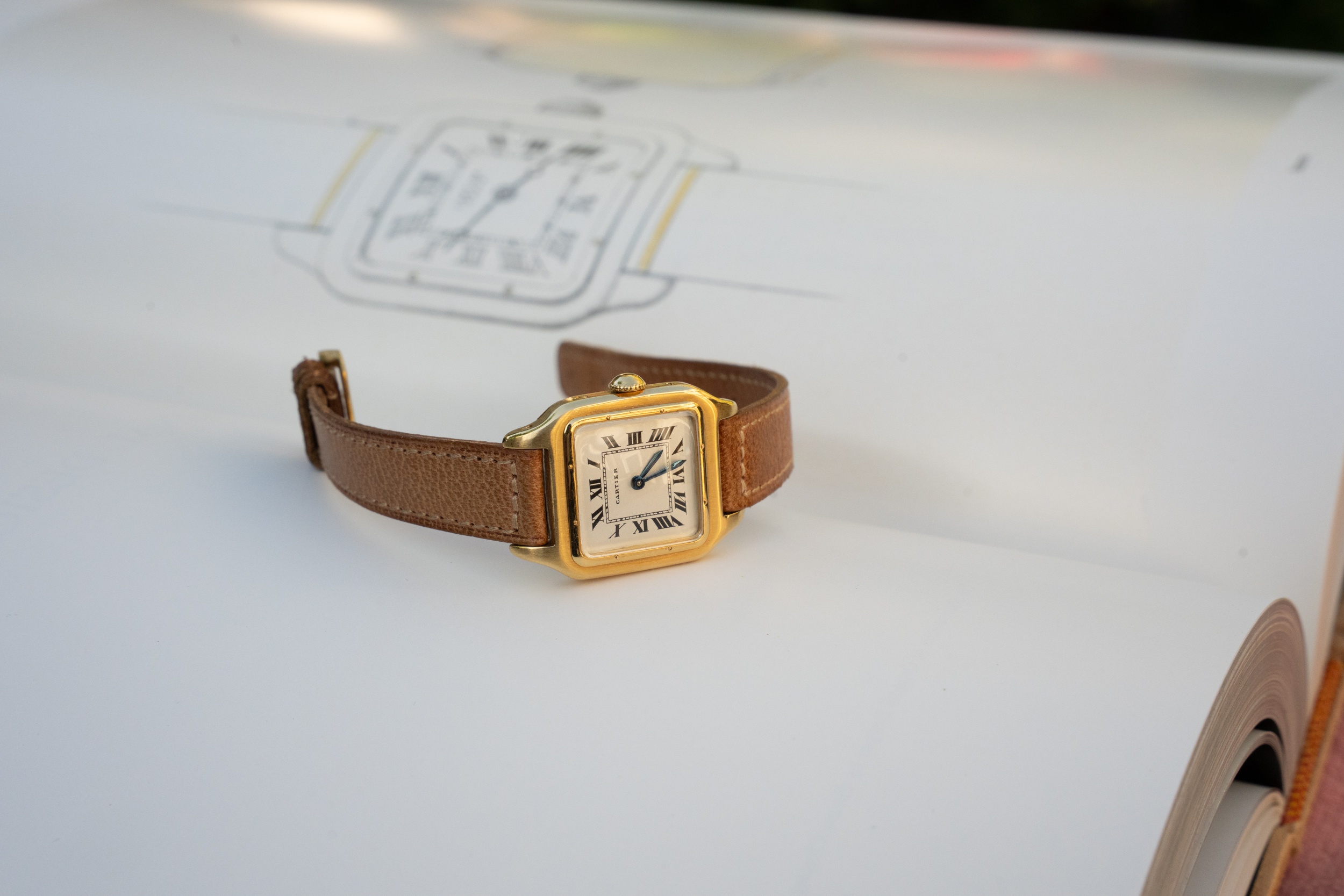
A Cartier Santos Dumont Ultra Thin in 18k yellow gold, reference 15751, powered by the hand-wound Frédéric Piguet Calibre 21, one of the thinnest movements ever placed in a wristwatch. The solid gold caseback is personally engraved and signed by Charles Gates Dawes, 30th Vice President of the United States and 1925 Nobel Peace Prize laureate, as a gift to a close friend. An extraordinary convergence of horological rarity and American historical provenance, available now through Vintage Times Amsterdam.
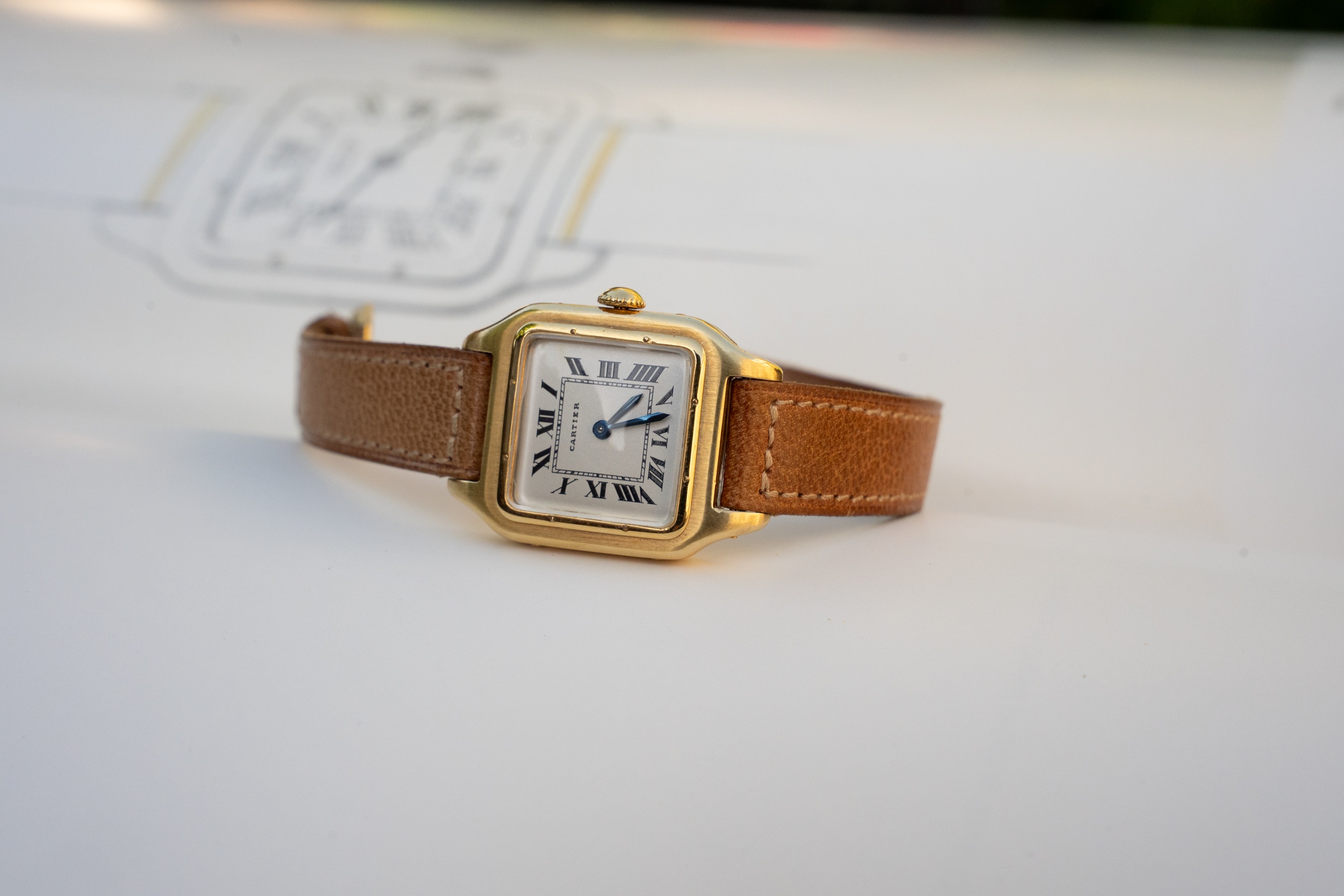
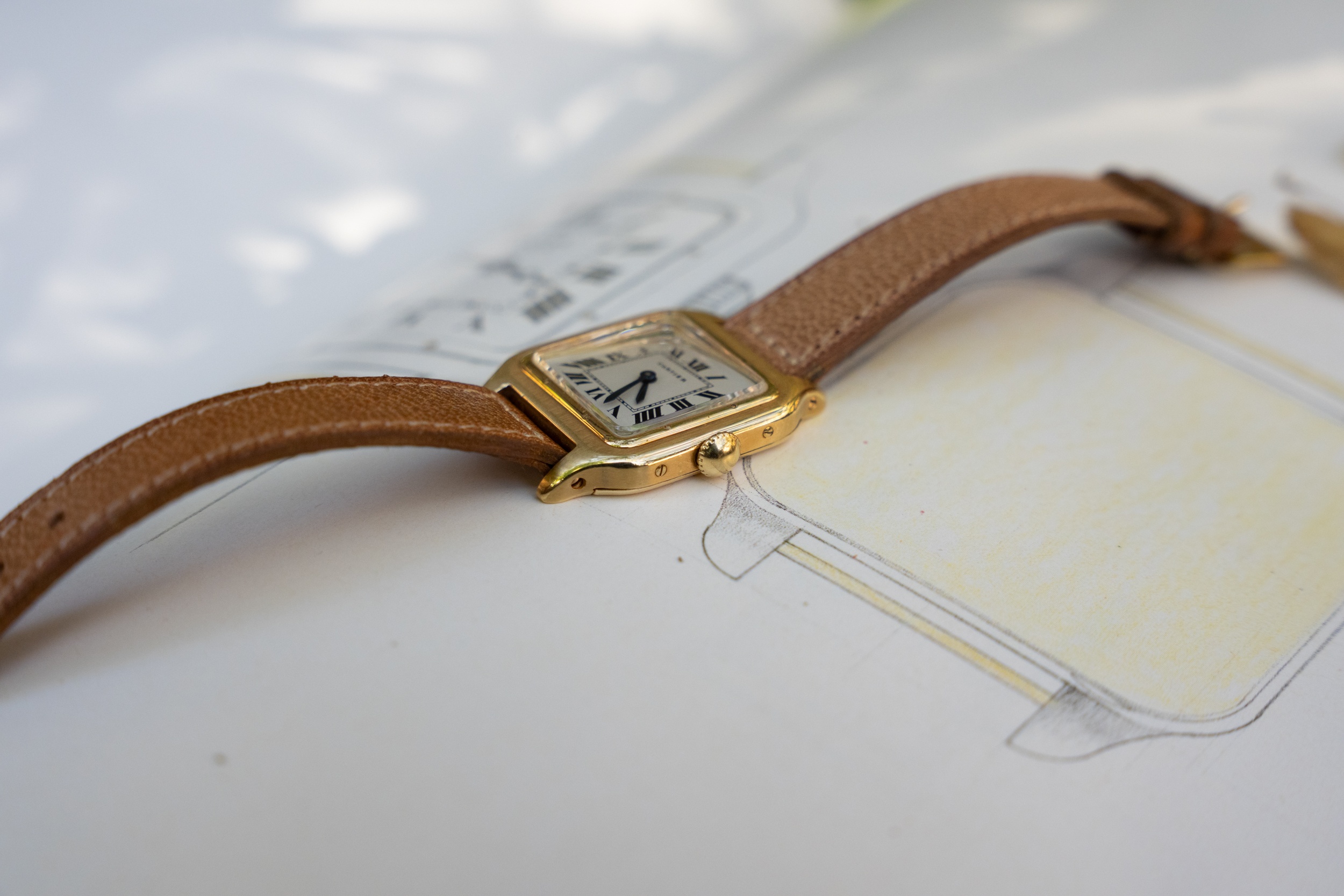
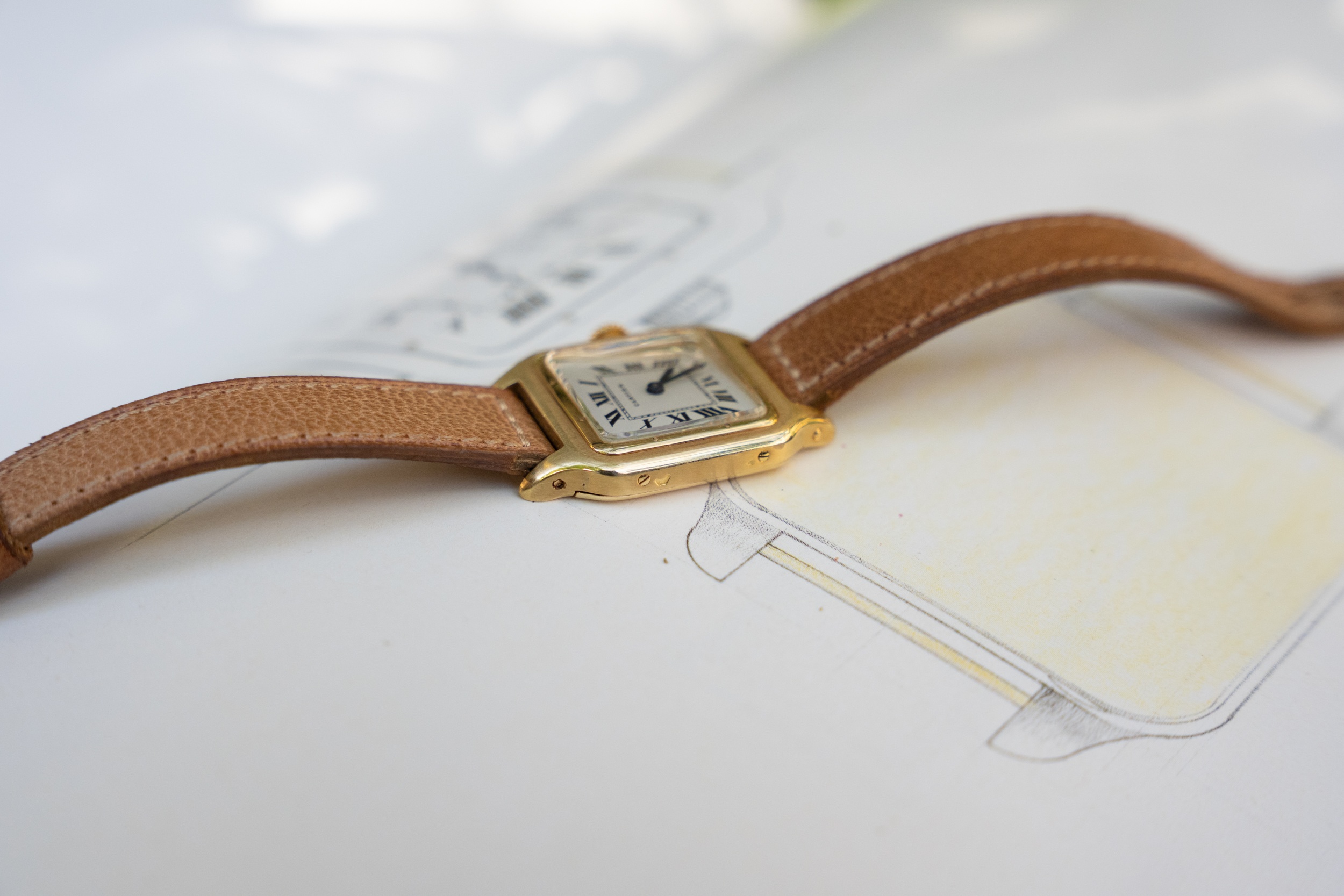
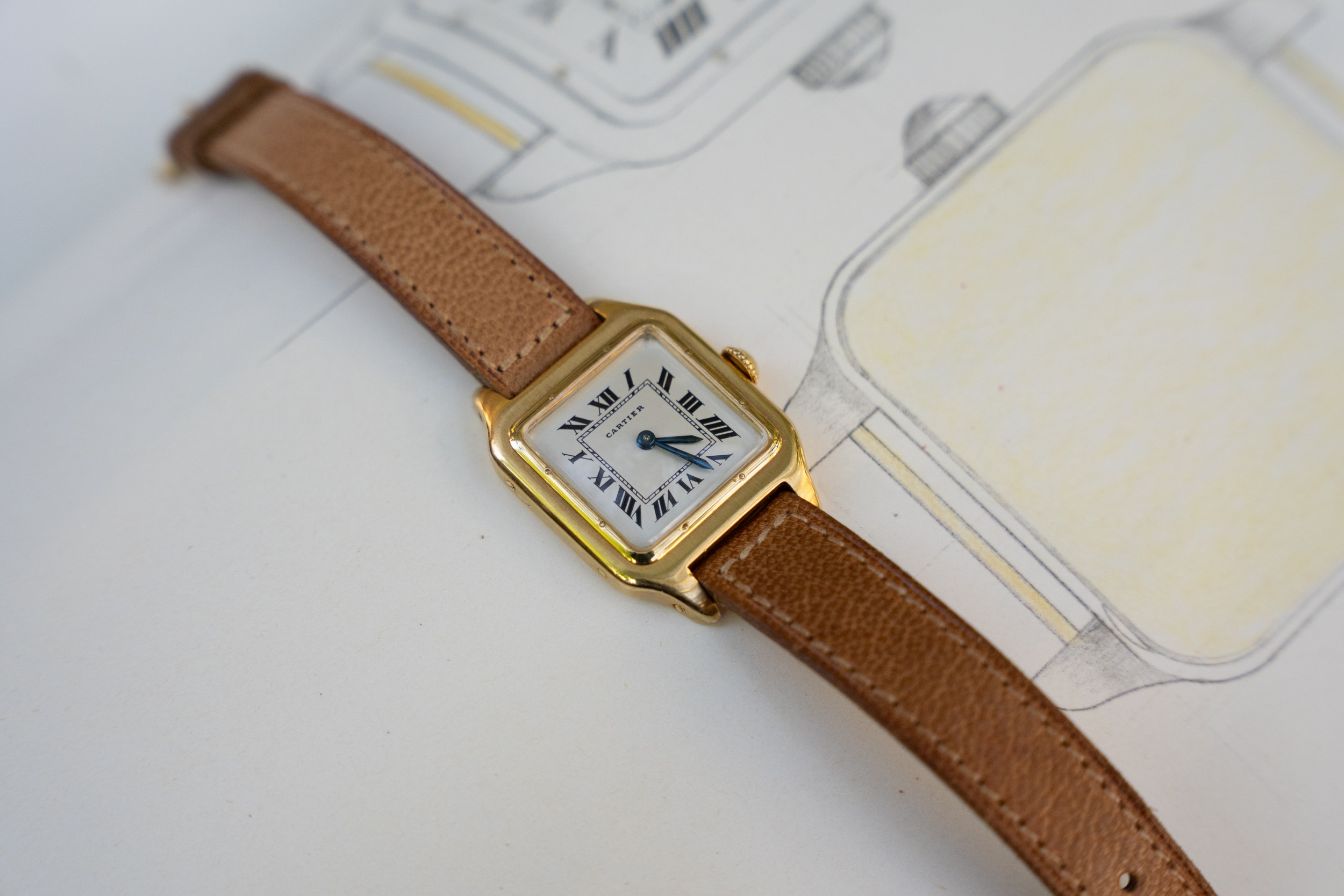
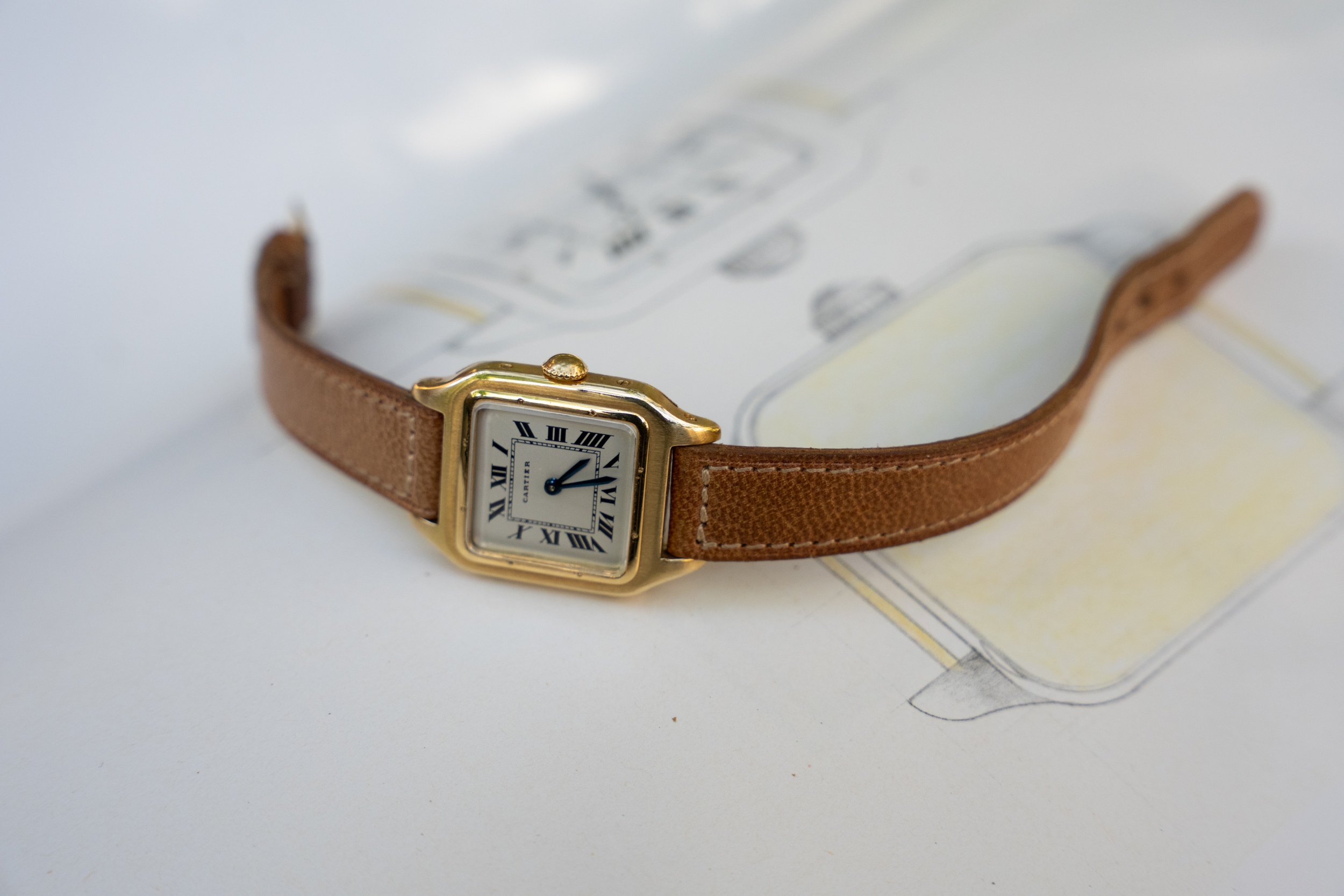
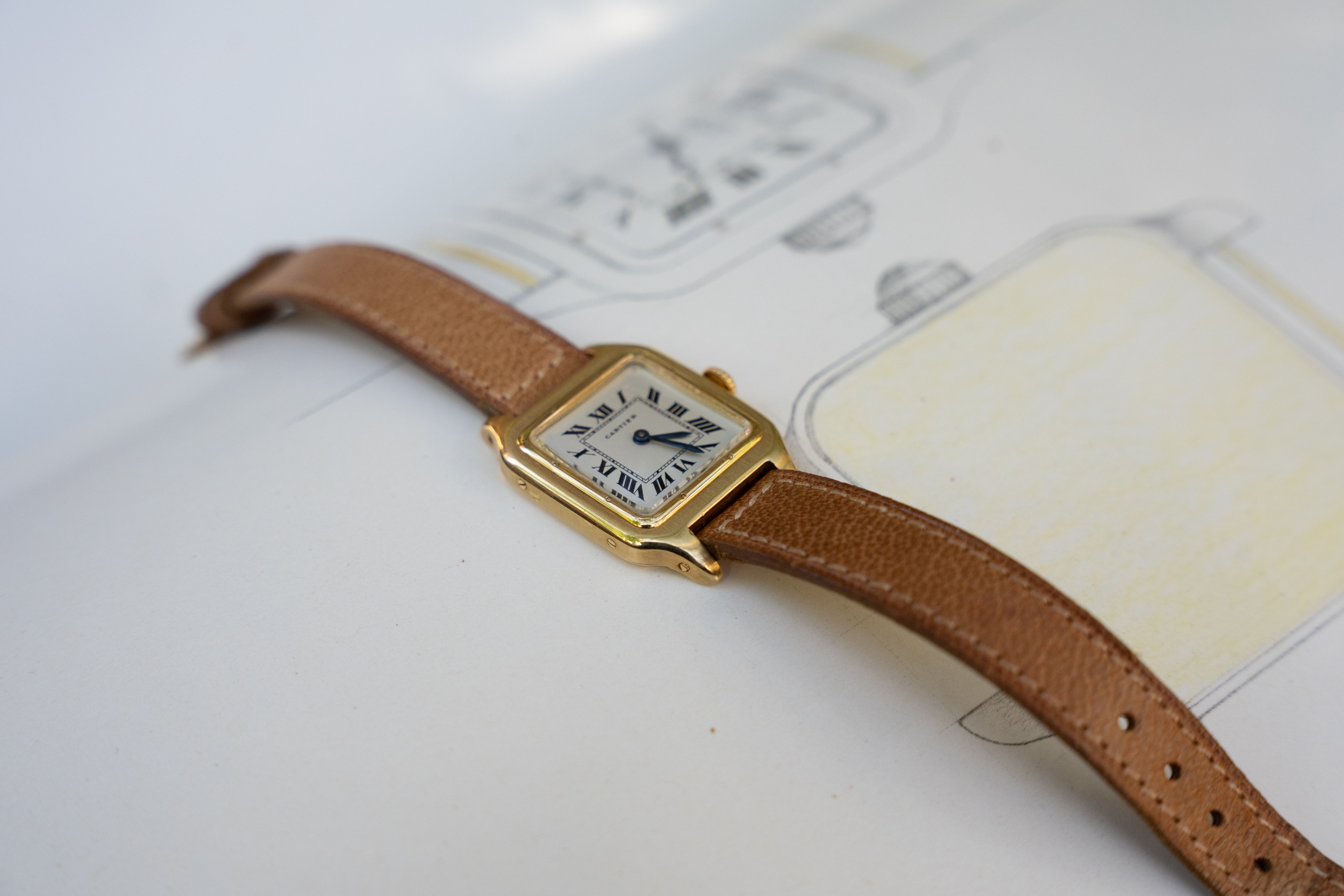
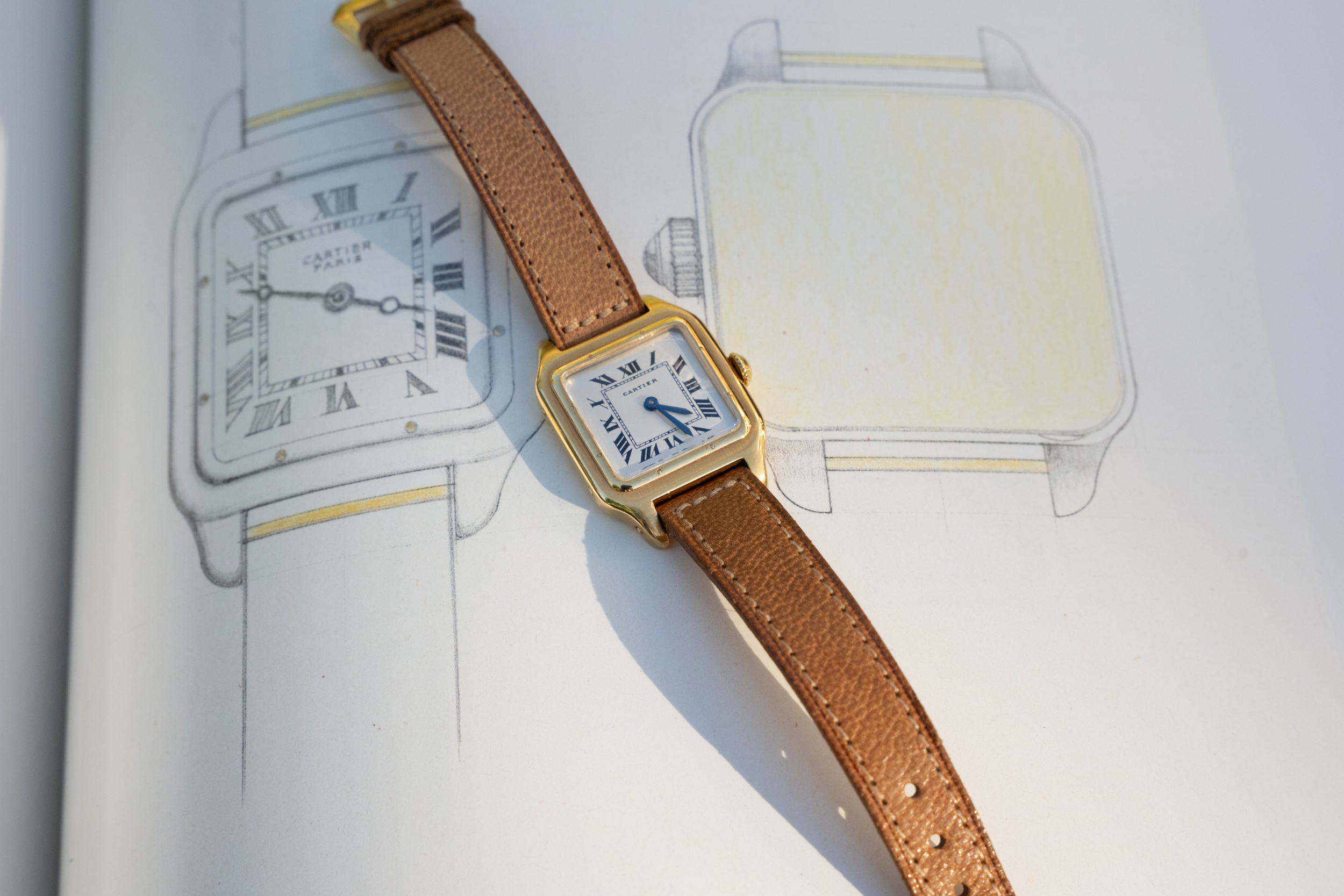
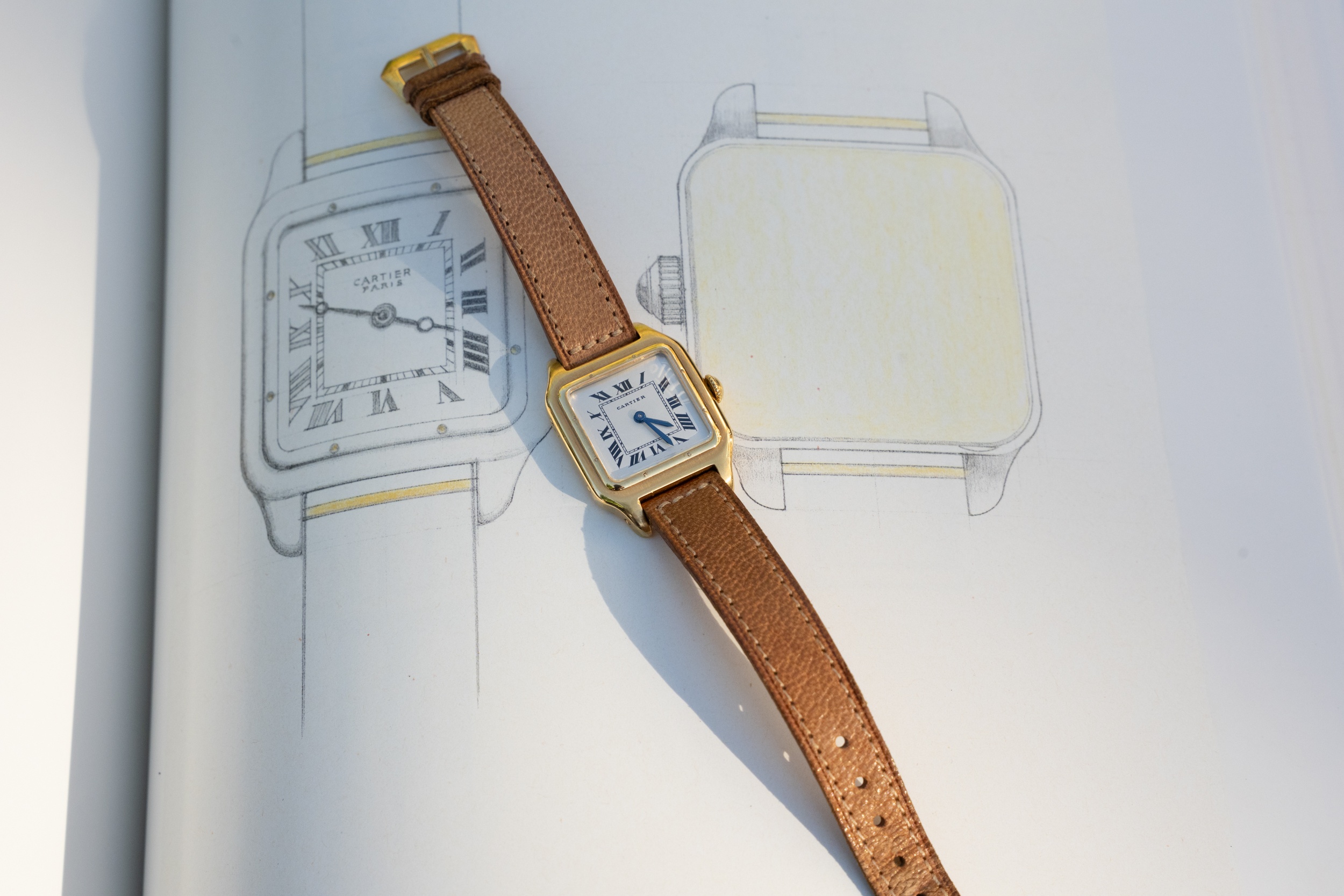
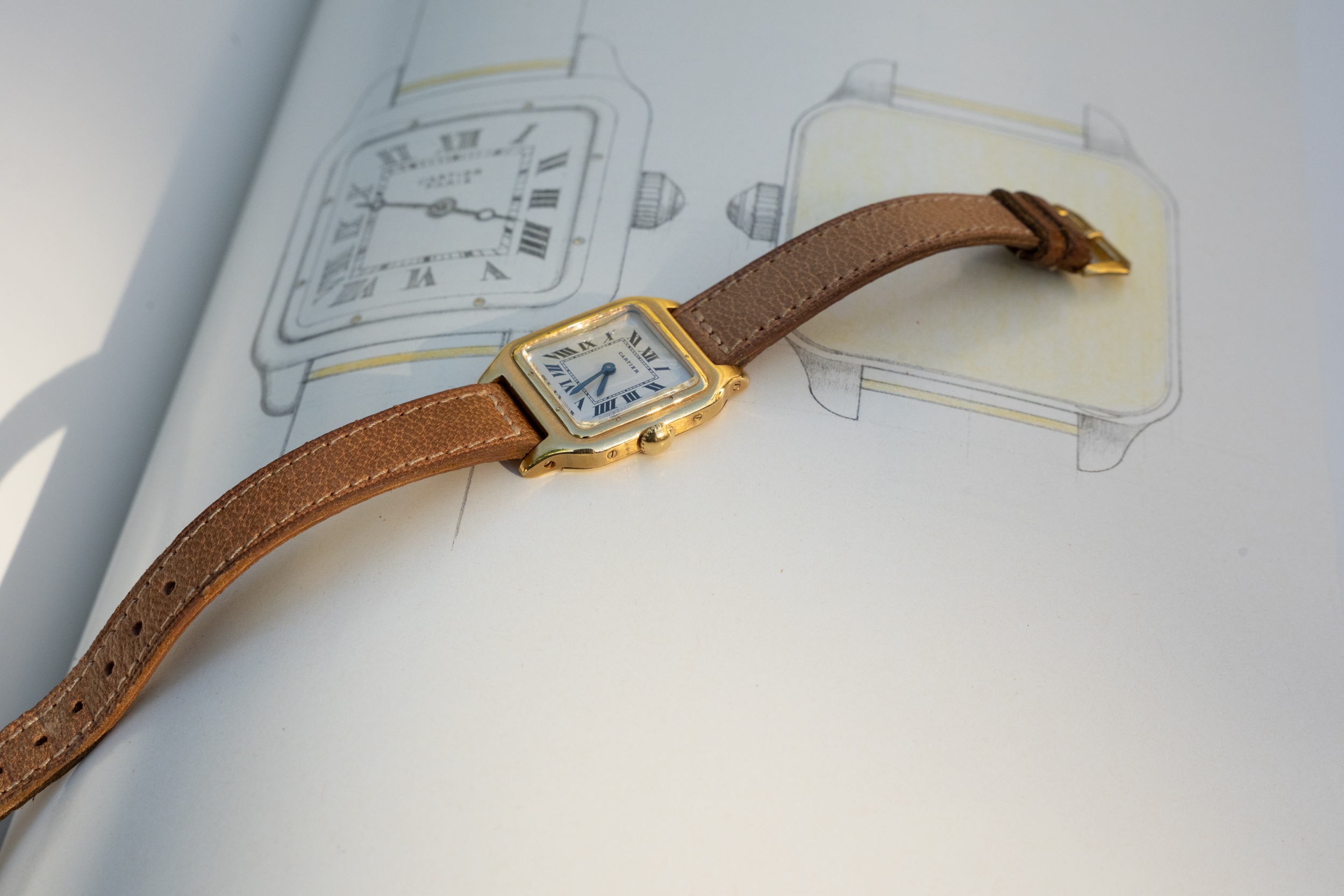
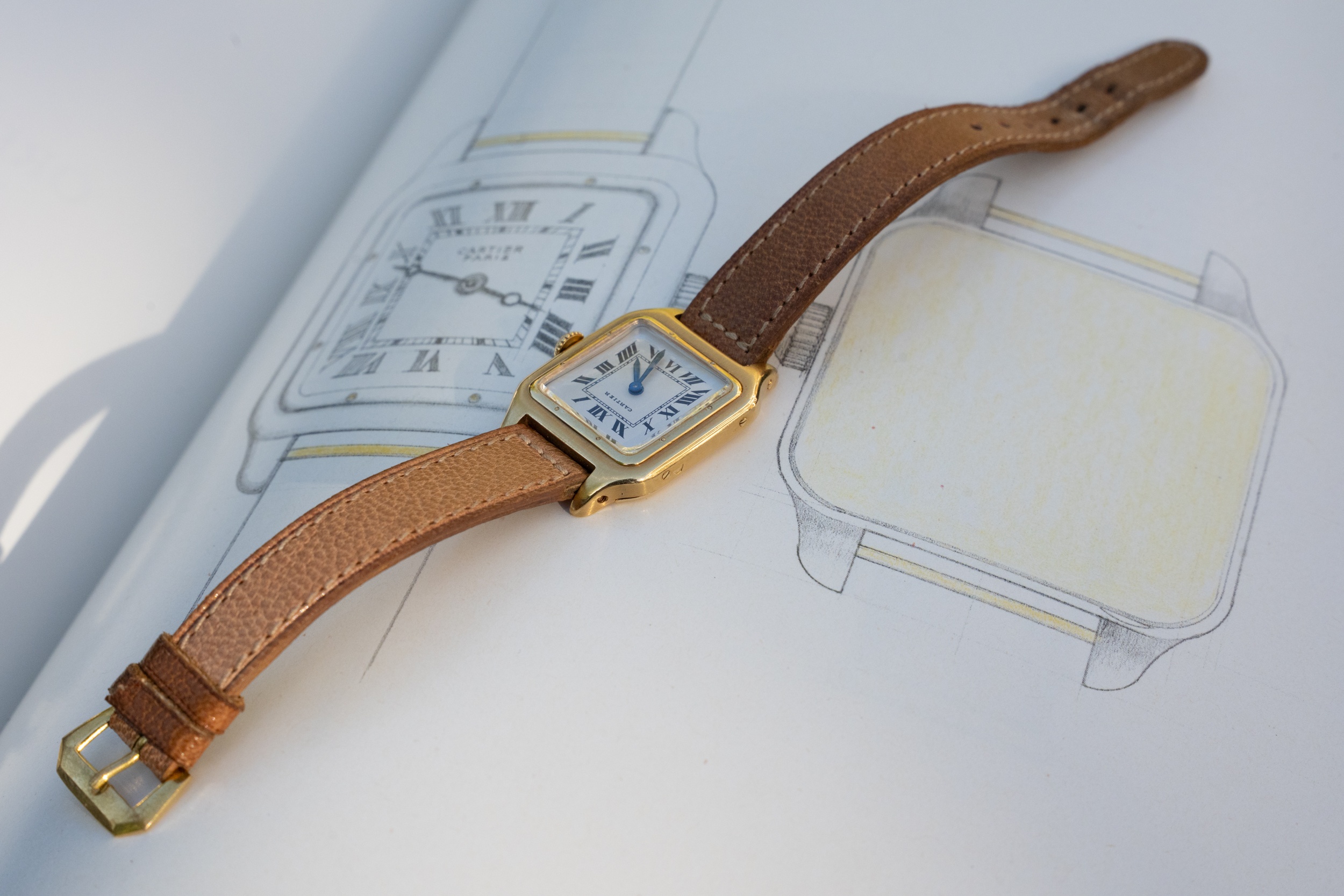
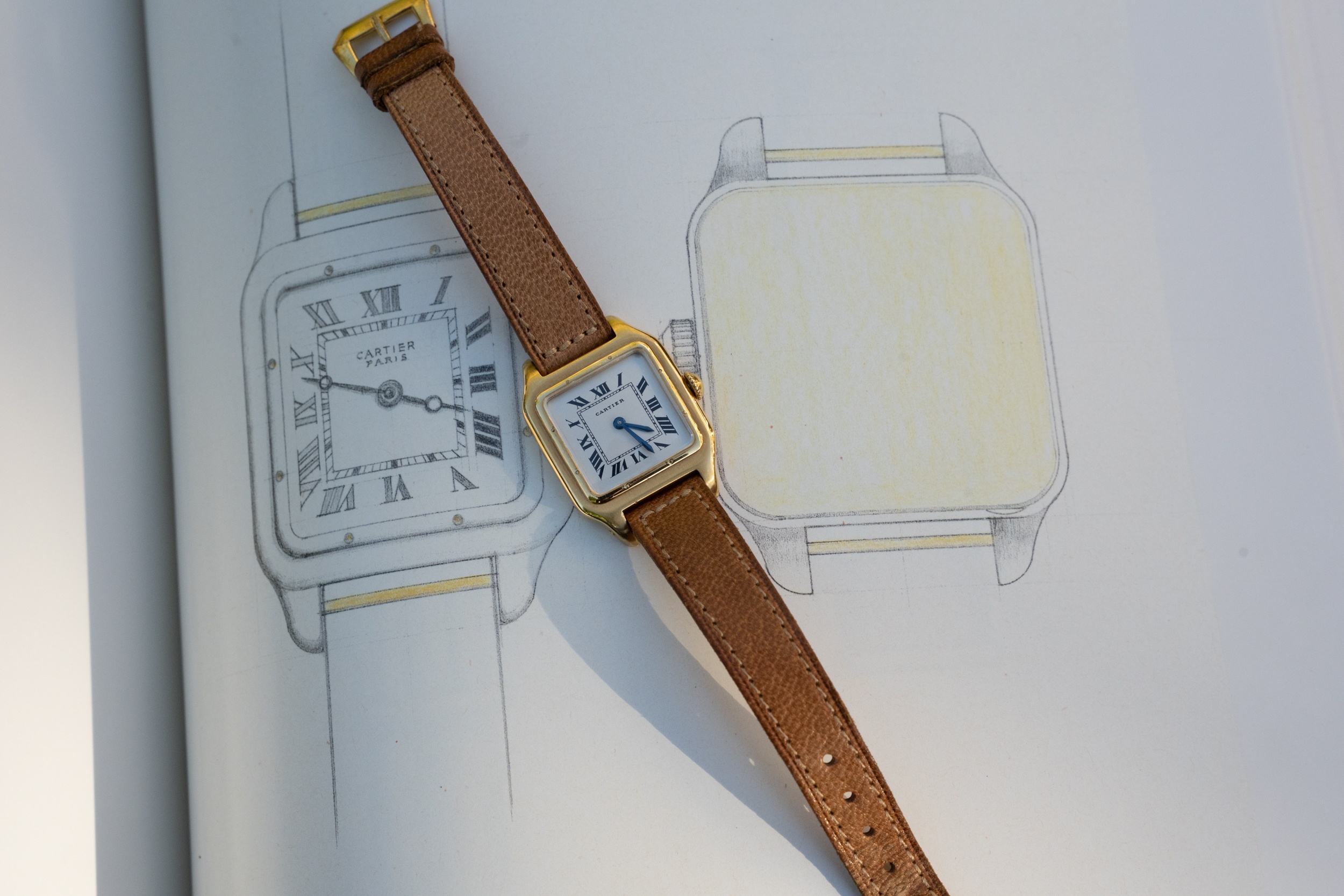
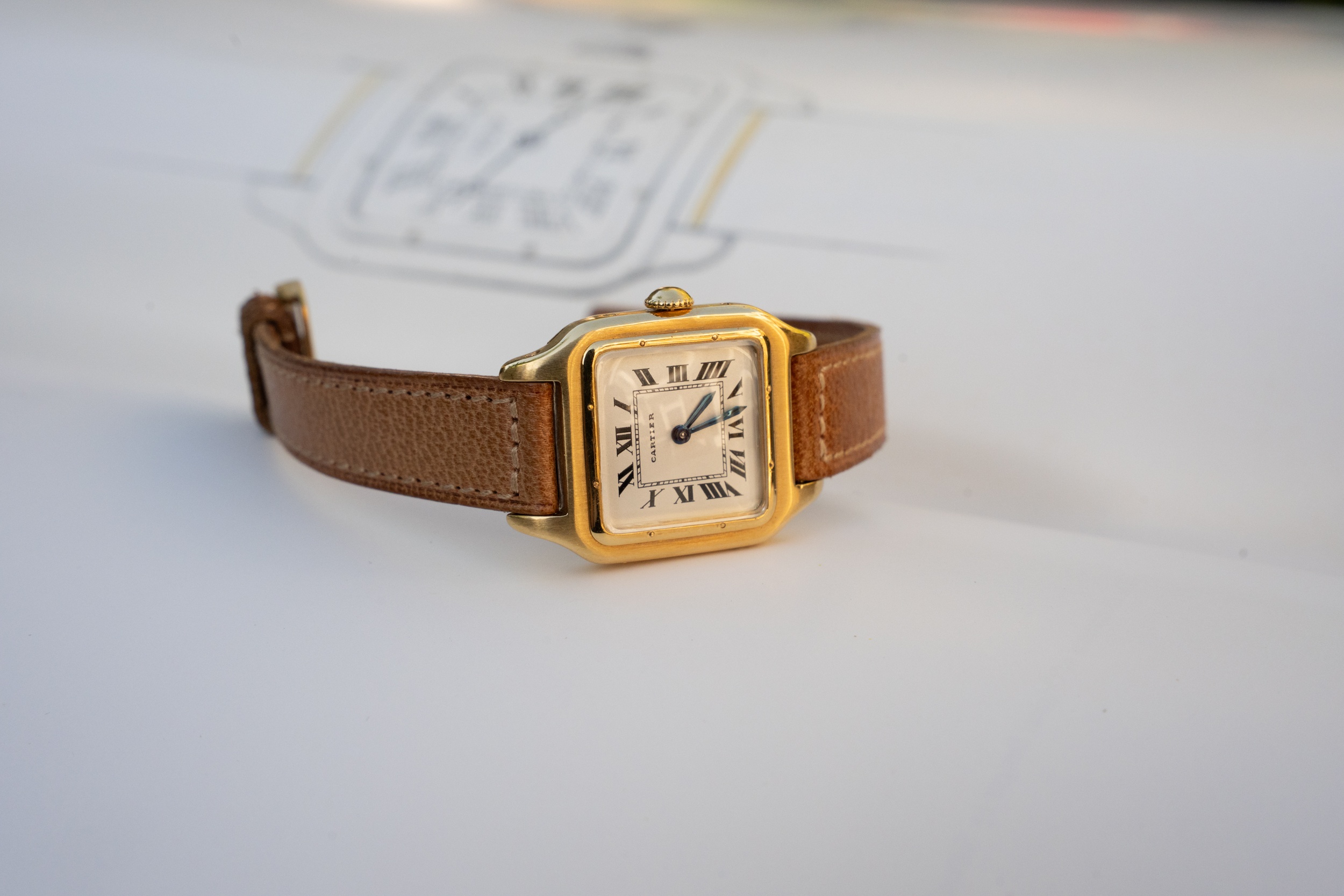
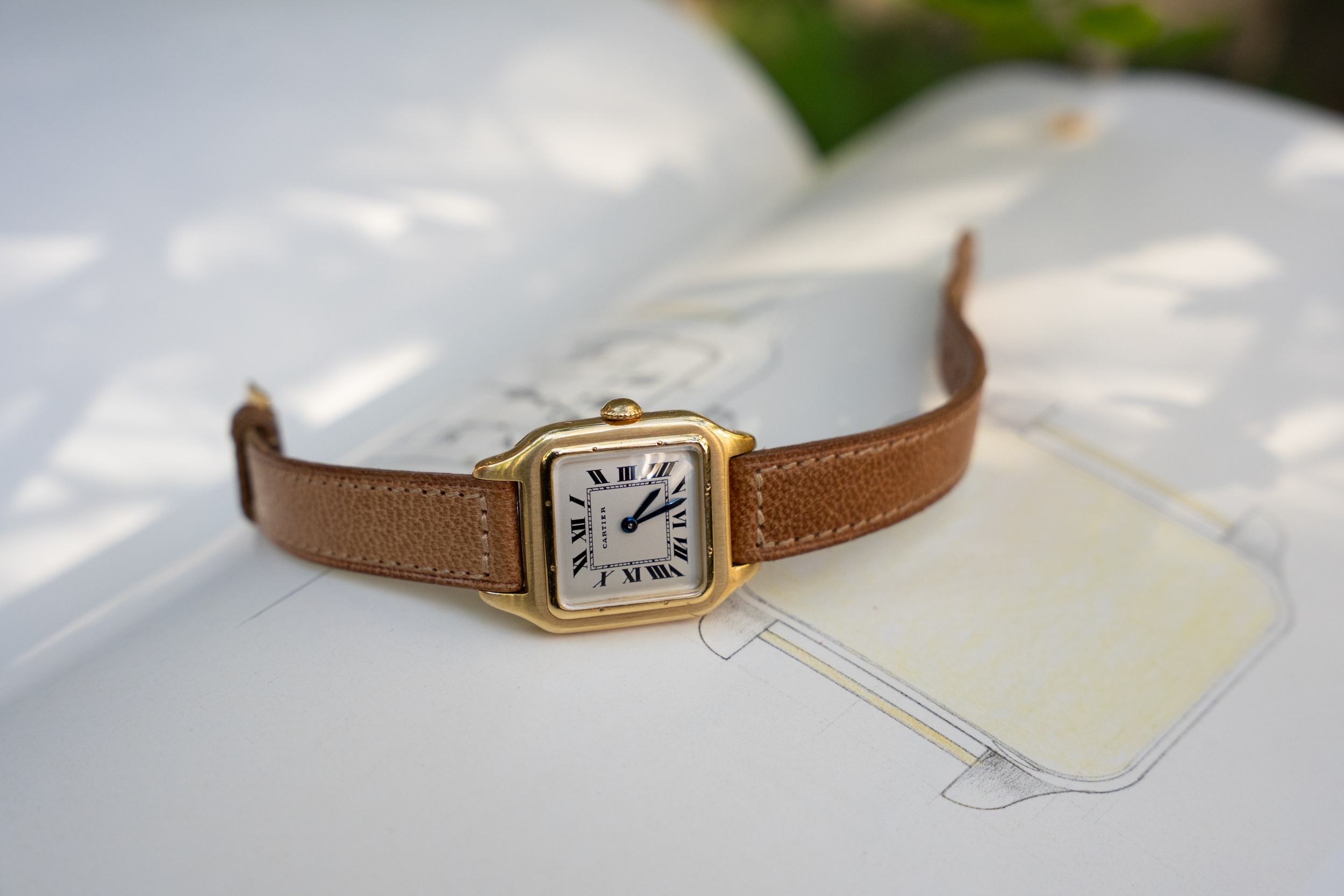
This Cartier Santos Dumont Ultra Thin in 18k yellow gold, reference 15751, is presented on a tan leather strap with a yellow gold buckle. The watch is powered by the Frédéric Piguet Calibre 21, the ultra-thin hand-wound movement that gives the Santos Dumont its famously flat, dress-watch profile, and retains its white enamel dial with black Roman numerals, railroad chapter ring, and blued steel sword-shaped hands in excellent condition. It is a refined and exceptionally elegant watch in its own right. But it is the caseback that makes this particular example extraordinary.
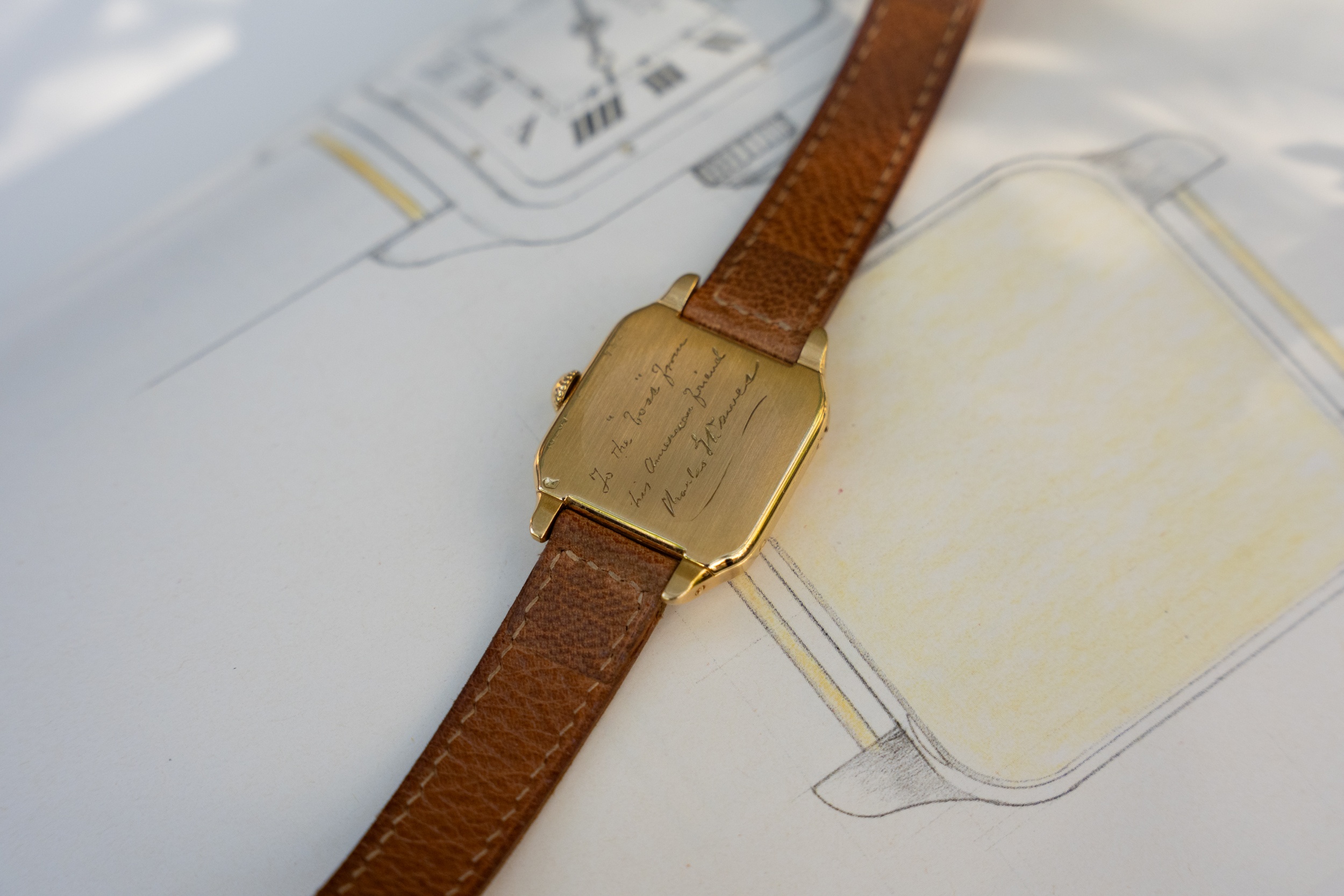
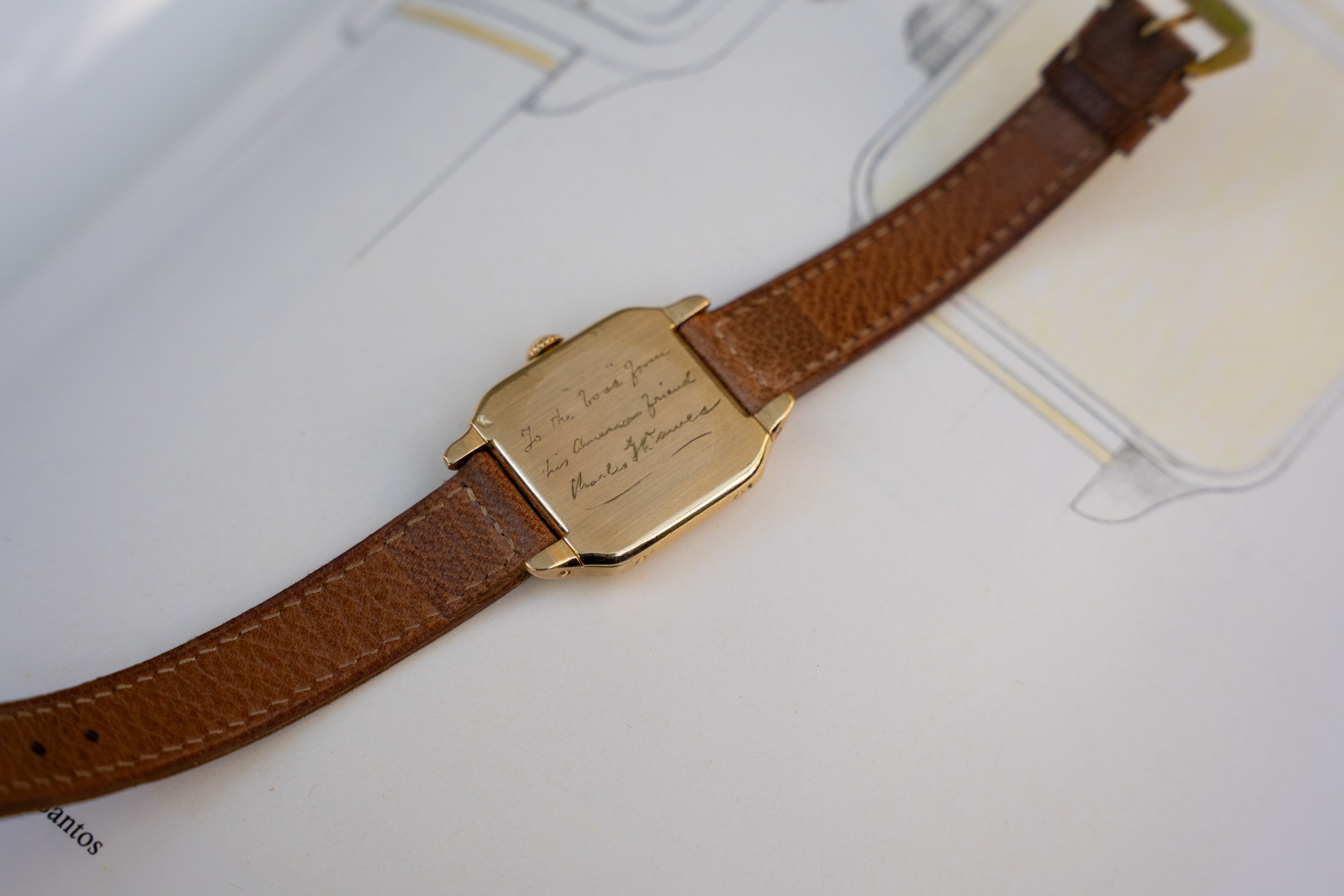
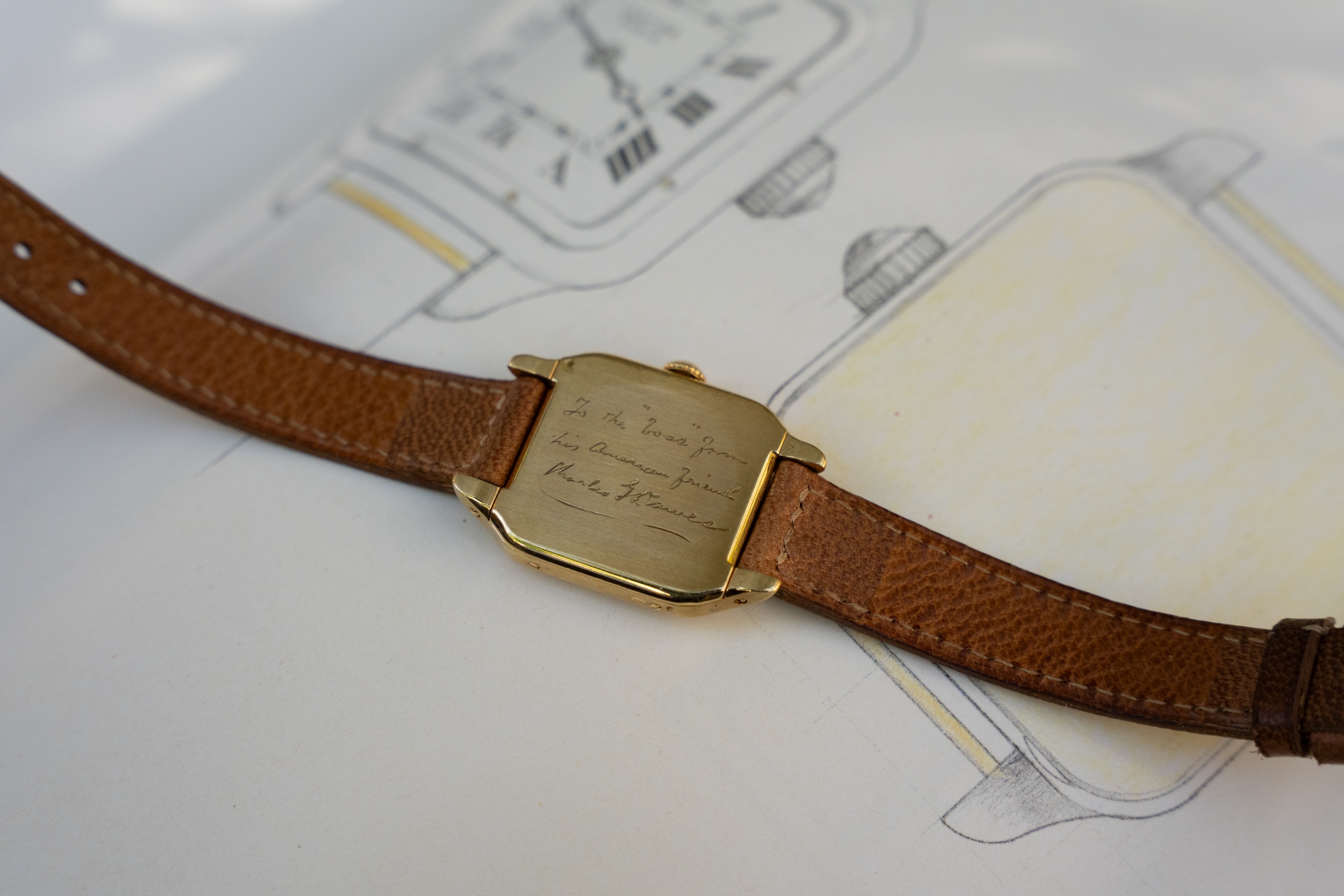
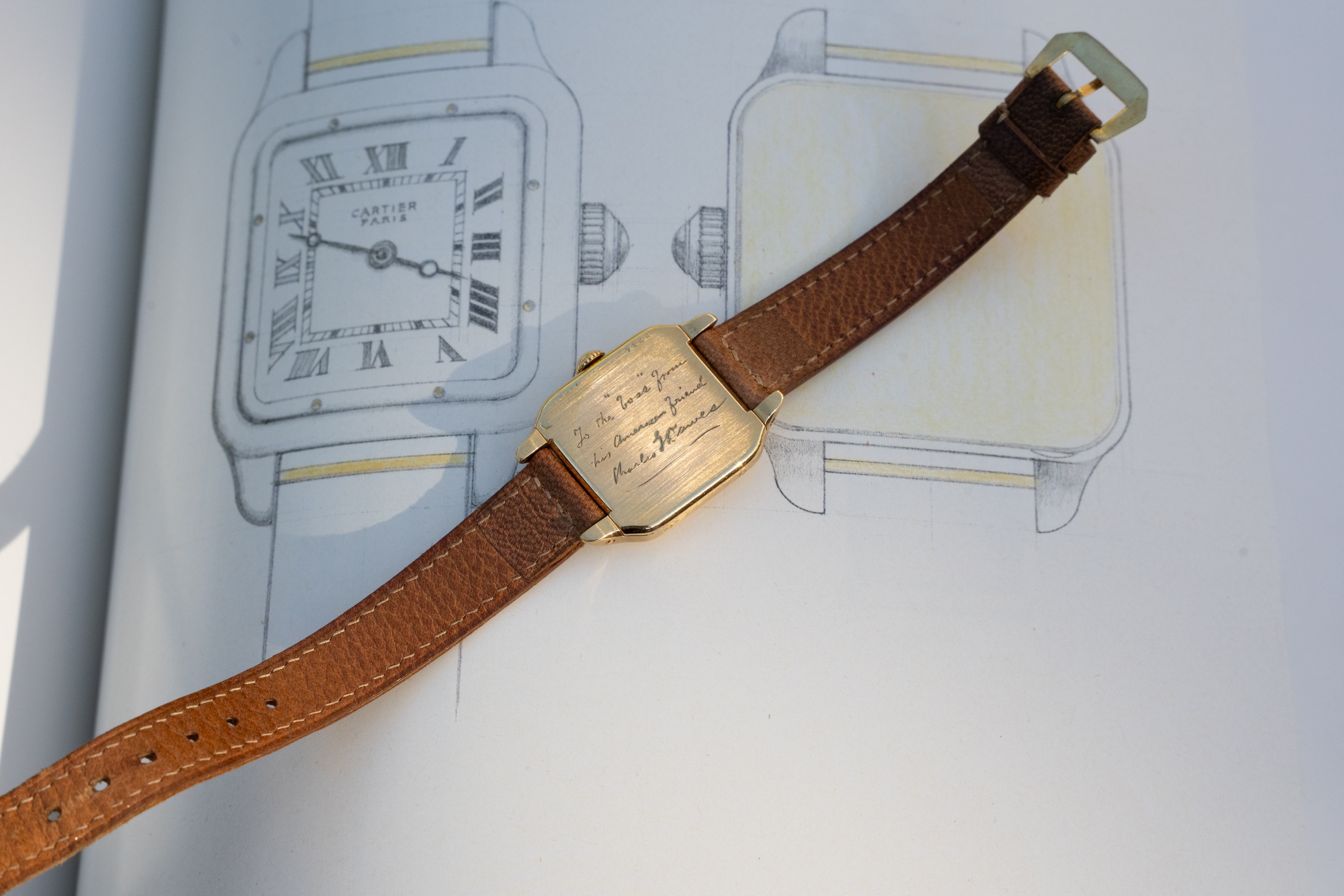
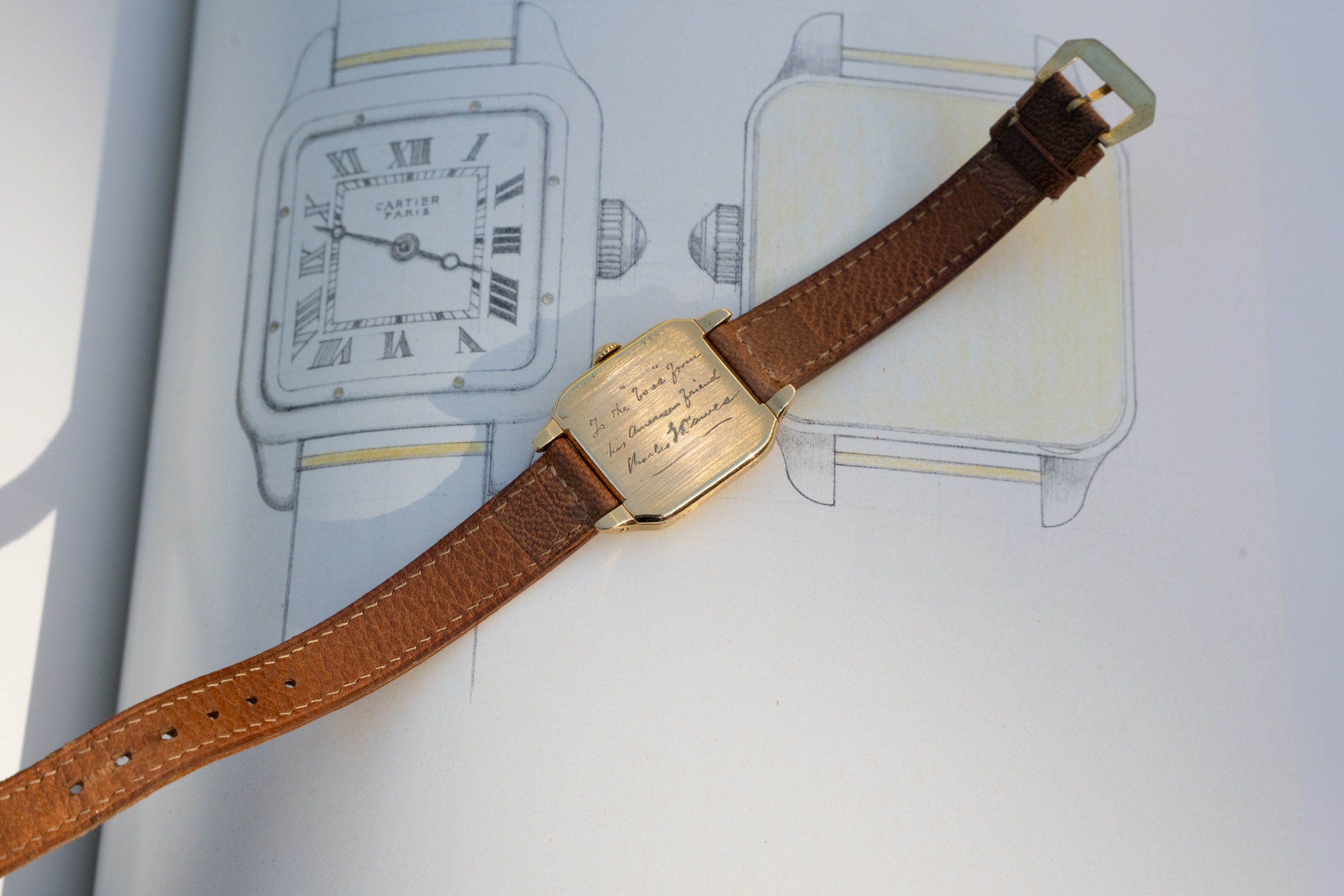
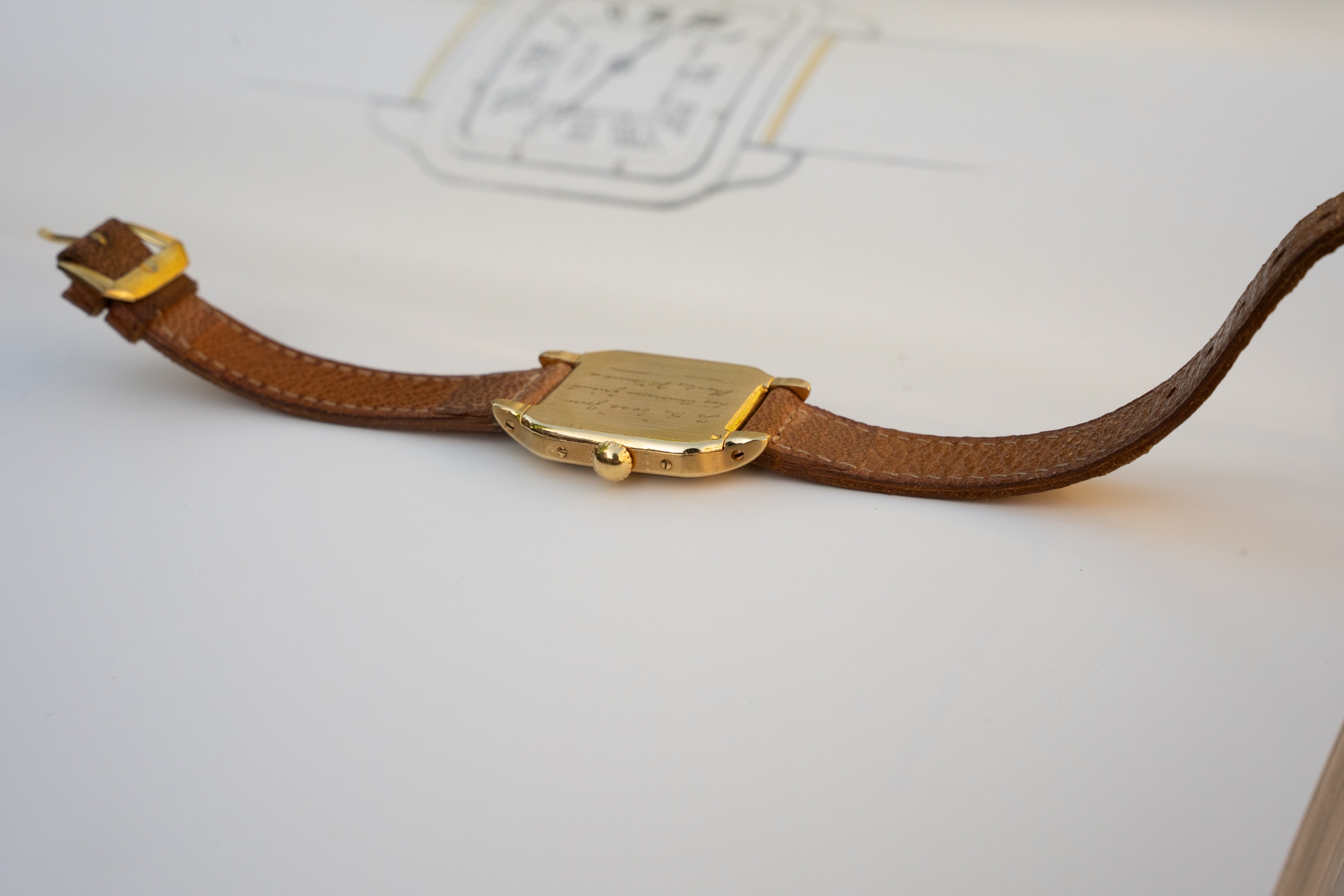
Engraved in the hand of the giver, the solid gold caseback reads:
“To the ‘boss’, from your old Calahan friend. Charles Dawes”
Charles Gates Dawes. 30th Vice President of the United States. Nobel Peace Prize laureate, 1925. Architect of the Dawes Plan, the financial framework that stabilised Germany’s economy after World War I, prevented a second European war in the 1920s, and reshaped the international order. This is his watch, gifted to a close friend and business associate in the personal, warmly irreverent tone of a man who navigated the highest offices of American power without ever losing the directness of a Chicago banker.
Charles Gates Dawes – A Life at the Centre of History
Few figures of the twentieth century accumulated as many distinctions across as many fields as Charles Gates Dawes (1865–1951). He was the youngest Comptroller of the Currency in American history, appointed at 33 by President McKinley. He founded and ran the Central Trust Company of Illinois – the “Dawes Bank” – one of the most influential financial institutions in Chicago. He served as Brigadier General under General Pershing in World War I, coordinating the entire Allied supply chain across the Western Front. In 1921, he became the first-ever Director of the Bureau of the Budget, bringing the federal accounts under systematic control for the first time. He was elected Vice President of the United States in 1924 on Calvin Coolidge’s ticket, and served from 1925 to 1929. President Hoover then appointed him US Ambassador to the Court of St James, the most prestigious diplomatic posting available to an American.
And in 1925, he was awarded the Nobel Peace Prize.
The Nobel was for the Dawes Plan of 1924: a masterly restructuring of Germany’s reparations obligations under the Treaty of Versailles that replaced punitive demands with a workable, graduated schedule backed by American loans. France withdrew its troops from the Ruhr. Germany stabilised. Europe breathed. The plan brought the continent nearly a decade of relative peace before the conditions of the Great Depression, and the failure of a successor plan created the circumstances for what followed. Dawes received the Nobel Prize not as a diplomat or a politician but as a financier: a banker who had applied the discipline of commerce to the intractable problem of international debt.
He was also improbably a composer. His “Melody in A Major,” written in 1912 and later set to lyrics as “It’s All in the Game,” reached number one on the pop charts in 1958, making Dawes the only US Vice President to have written a number-one hit single, and one of only two Nobel Prize winners (alongside Bob Dylan) to have done so.
The Inscription – An Old Friend’s Watch
The engraving reads with the ease of a man writing to someone he has known for decades: “To the ‘boss’.” The quotation marks around “boss” carry the gentle irony of a long friendship; Dawes acknowledging, with evident affection, that whoever received this watch held some position of authority in their shared world. “From your old calahan friend” locates the relationship in the close-knit Chicago business and civic circles Dawes inhabited for most of his life, the bankers, lawyers, industrialists, and civic figures who built the city. The informality of the inscription, signed “Charles Dawes” in lower case, is entirely consistent with the man’s well-documented character: brilliant, driven, famously blunt, and warmly loyal to those he considered his own.
This watch was not a diplomatic gift or a ceremonial presentation. It was a personal one, chosen and inscribed by Dawes himself for someone he called his friend.
The Santos Dumont – Cartier at Its Most Refined
The Santos Dumont takes its name from Alberto Santos-Dumont, the Brazilian aviation pioneer who asked Louis Cartier in 1904 to design a wristwatch he could consult without taking his hands off the controls of his airship. The result was the world’s first purpose-designed pilot’s wristwatch, and the first to make the square case a feature rather than an afterthought. The subsequent Santos collection became one of the defining design families in the history of horology.
The Santos Dumont Ultra Thin is the most formal and refined version of that lineage. Where the sportier Santos de Cartier models wear their exposed bezel screws with confident bravado, the Dumont’s movement, the hand-wound Calibre 021 MC, derived from the Frédéric Piguet 21, allows a case of almost impossibly slim proportions. At just 1.75mm in height, it is one of the thinnest movements ever placed in a wristwatch, enabling a profile that lies flat against the wrist and disappears beneath a shirt cuff. Reference 15751 was produced for a relatively brief period before Cartier transitioned to quartz, making all-gold examples with the manual-wind movement genuinely scarce.
The Dial
The dial is white, crisp, and classically Cartier, painted with black Roman numerals set within the characteristic railroad minute track, with a discreet “Cartier Paris” signature at twelve. The blued steel sword-shaped hands read cleanly against the white ground. The crown at three o’clock is set with a blue sapphire cabochon, a Cartier signature detail that provides the only point of colour on an otherwise entirely monochrome composition. It is a dial of absolute restraint, conceived to be read rather than admired, and admired all the more for it.
Condition: Good vintage condition with light signs of wear consistent with age
Accessories: Watch only (no box or papers)
Provenance: Caseback engraved “To the ‘boss’ from your old Calahan friend. Charles Dawes”, gifted by Charles Gates Dawes, 30th Vice President of the United States and 1925 Nobel Peace Prize laureate
Warranty: 1 year warranty
Vintage Times
Vintage Times Amsterdam is a small watch boutique who mainly deals online and with a select group of private collectors. We are constantly looking for rare vintage timepieces and try to present the best condition available. Please don’t hesitate to get in contact for more information about this watch or other timepieces from our collection. We ship worldwide and also welcome you for a visit at our office in Amsterdam.



 View Product
 View Product
 View Product
 View Product
 View Product
 View Product
 View Product
 View Product
 View Product
 View Product
 View Product
 View Product